
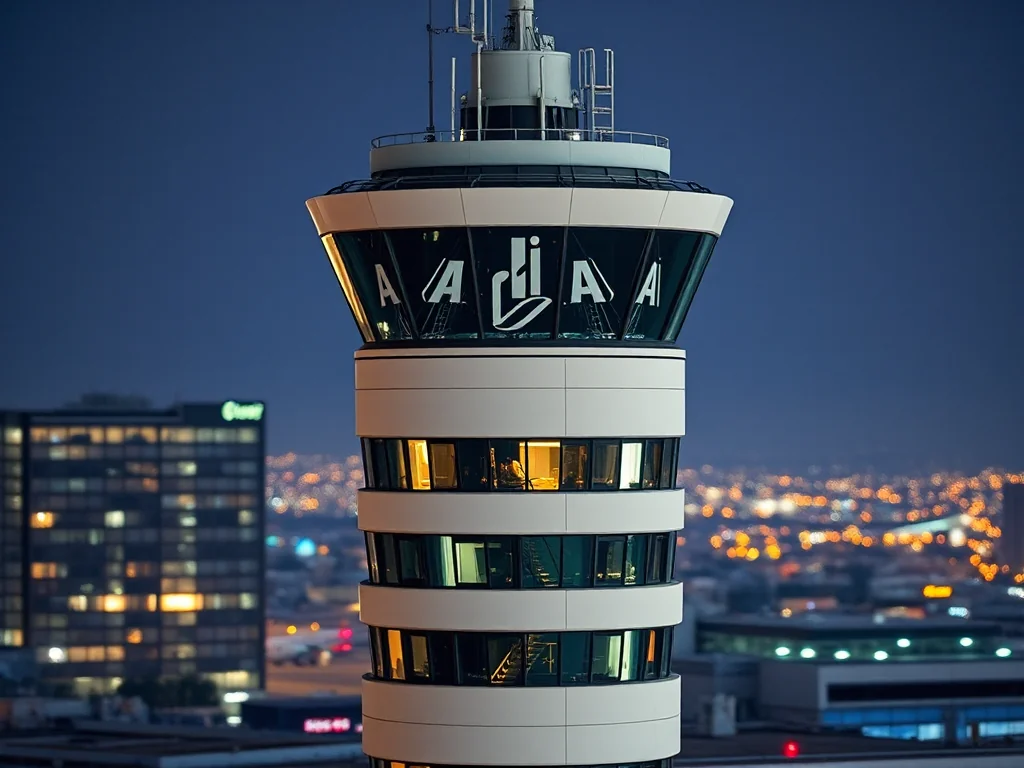
Air traffic control safety and the second Sydney airport
Air traffic control (ATC) is the critical system managing the safe and orderly flow of aircraft in controlled airspace to prevent mid-air collisions. BanksiaPulse reports that as of August 21, 2026, internal whistleblowers have notified the federal government, expressing minimal confidence in the ability of controllers to manage new rule changes associated with Sydney’s second airport. With the aviation sector under intense operational pressure, ensuring these systems function correctly is vital for maintaining the 100% safety record required for commercial passenger travel across Australia (Source: ABS, 2025).
- What is air traffic control and how does it prevent collisions?
- How does airspace redesign affect air traffic control operations?
- What are the main collision risks identified by Sydney air traffic controllers?
- Why are safety concerns being raised about the new airspace design?
- What is the difference between old and new air traffic control procedures in Sydney?
- How do air traffic controllers manage increased workload during airspace transitions?
- Frequently Asked Questions
What is air traffic control and how does it prevent collisions?
Air traffic control acts as the primary safety mechanism in aviation, utilizing radar, radio communications, and sophisticated flight planning to keep aircraft separated by specific distances. Controllers provide instructions to pilots regarding altitude, speed, and heading to maintain designated safety buffers. This system relies on rigorous standardized protocols to ensure that every flight remains within a protected block of airspace, mitigating the risks inherent in dense flight corridors. By managing the flow of traffic, these professionals serve as the last line of defense against potential mid-air incidents. In Australia, the integrity of these systems is vital for public trust and operational efficiency. The Australian Bureau of Statistics (ABS) notes that millions of passengers move through domestic hubs annually, necessitating a seamless coordination process. When controllers, who are responsible for monitoring complex flight paths, express concerns about their capacity to handle new procedures, it highlights a significant strain on the existing safety framework. Understanding this role explains why any degradation in confidence among staff is a major cause for national alarm regarding aviation security.
For passengers, the effectiveness of these measures is best measured by the absence of incidents, even though the labor required behind the scenes is often invisible. Controllers use a combination of automated alerts and manual oversight to monitor thousands of flight kilometers each day. As the industry faces transitions involving infrastructure expansion, the necessity for robust, proven procedures cannot be overstated. If personnel report feeling overwhelmed, the system requires immediate review to ensure that the fundamental tools used to prevent collisions remain effective in the face of evolving operational demands.
How does airspace redesign affect air traffic control operations?
Airspace redesign fundamentally alters the navigation paths and sequencing protocols used by controllers to manage arriving and departing aircraft. When new airports or flight paths are introduced, controllers must adapt to shifting traffic density, revised holding patterns, and updated communication vectors. This transition requires significant training and technical adjustment to ensure that existing safety buffers remain intact while accommodating higher volumes of air traffic. Any miscalculation in the design phase can lead to increased complexity, which puts extra cognitive load on personnel responsible for the daily management of these flights. In the context of Sydney’s second airport, the implementation of new rules for controllers creates a challenge in reconciling legacy systems with modern requirements. The transition often involves shifting from familiar, long-standing flight routes to a new, untested geometry of the sky. As controllers adapt, the speed at which they process information regarding pilot intent and aircraft positioning becomes a critical factor in performance. If the redesign is not aligned with the practical operational realities faced by those on the ground, the margin for error may narrow, potentially complicating the management of peak-hour traffic.
Effective airspace management requires that the tools and rules provided to controllers undergo rigorous stress testing before full implementation. For the aviation community, this means that every change to the flight map is a substantial operational risk. If controllers indicate they have minimal confidence in managing these changes, it suggests that the current integration strategy may lack the necessary foresight or resource support. Maintaining safety standards necessitates that administrative changes to airspace must be balanced by adequate staffing, ongoing training, and highly reliable technology to support the controllers in their safety-critical work.
What are the main collision risks identified by Sydney air traffic controllers?
The primary collision risks identified by Sydney air traffic controllers revolve around the loss of vertical and horizontal separation between aircraft during complex sequencing transitions. When airspace design changes, there is an increased risk that controllers may face difficulty in maintaining safe spacing as multiple aircraft merge into new approach patterns. This is particularly problematic if the new rules are perceived to be less intuitive or if they conflict with established safety procedures that controllers rely on during high-pressure situations. The potential for human error spikes when systems are in flux. A specific concern arises during periods of high traffic volume, where the margin for error is already thin. If controllers feel they lack the capacity to handle these new rules, they are effectively signaling that the environment has become too complex to manage without compromising safety. This risk is compounded by the sheer density of the Sydney airspace, which is already one of the busiest in the country. Data indicates that even minor deviations in flight paths can trigger automated conflict alerts, requiring immediate corrective action and placing significant stress on the controller managing the flight sector.
To mitigate these risks, industry best practices typically dictate a phase-in approach that allows for incremental testing of new routes and protocols. However, if the transition is rushed, the operational pressure on staff increases, potentially leading to fatigue or decision-making errors. Examples of these risks include unintended flight path intersections or delays in radio communication that lead to late tactical adjustments. Addressing these concerns requires a transparent dialogue between the government, aviation administrators, and the controllers themselves to ensure that safety remains the absolute priority throughout the development of the city’s second airport infrastructure.
Why are safety concerns being raised about the new airspace design?
Safety concerns are being raised because the current redesign for the second Sydney airport may not sufficiently account for the actual workload capacity of air traffic controllers. Whistleblowers have highlighted a critical gap between the theoretical design of the new airspace and the practical ability of staff to maintain safety under these new rules. When personnel who are tasked with daily flight management express that they have minimal confidence, it points to a failure in the consultation or implementation process that ignored the feedback of those operating the systems. This situation is particularly alarming given that Australia’s aviation safety record is built on the expertise of its workforce. Changes that are implemented without the full backing or understanding of the controllers can lead to operational bottlenecks and decreased efficiency. If the new design introduces unnecessary complexity, the probability of an incident increases. Controllers require a stable and predictable environment to operate effectively, and any design that creates confusion or forces them to deviate from standard, tested procedures is inherently risky and problematic for the long-term safety of the city’s aviation networks.
Furthermore, the reliance on advanced automation to support these changes may be masking deeper issues with human-system integration. If the technology intended to simplify the workload actually creates new, more complex challenges, the safety net is effectively weakened. As the government reviews these concerns, it must assess whether the current plans are viable or if they require a complete overhaul to align with the safety expectations of both the industry and the public. A failure to address these fundamental issues before the second airport becomes fully operational could have long-term consequences for the safety of all domestic flights.
What is the difference between old and new air traffic control procedures in Sydney?
The transition to new procedures involves a shift from established, legacy flight paths to a modernized, potentially more dense configuration designed to accommodate the city’s second airport. Old procedures relied on proven traffic flows that controllers have managed for decades, allowing for a high degree of predictability. In contrast, the new rules involve redesigned arrival and departure routes that aim to optimize space but introduce new intersections and sequencing requirements. This change necessitates a massive shift in cognitive strategy for controllers, who must now monitor different conflict points and variable aircraft speeds. To illustrate, a controller previously familiar with a single, linear arrival path into Sydney may now be required to manage a branching set of vectors that cross existing paths. This adjustment requires more frequent communication with pilots and increased vigilance regarding vertical separation. According to the Reserve Bank of Australia (RBA), infrastructure projects often impact broader economic stability; here, the intersection is the safety of the workforce. If the new procedures do not provide sufficient buffer times, the result is a tighter, less forgiving operating environment that places undue pressure on the personnel responsible for maintaining aircraft safety.
The difference is not merely a change in lines on a map, but a fundamental change in the operational tempo of the airspace. Controllers are now required to adapt to a system that potentially increases the density of flight tracks in the same total volume of airspace. For the controllers, this is a transition from an environment where they had mastery over the procedures to one where they feel they are lacking the tools or the confidence to ensure safety. This gap between the old system and the proposed changes is where the primary safety concerns are currently originating, requiring urgent review by authorities.
How do air traffic controllers manage increased workload during airspace transitions?
Controllers manage increased workload through a combination of systematic prioritization, tactical sequencing, and the application of standardized separation minima (the minimum distance allowed between aircraft). During transitions, this process becomes significantly more strenuous as controllers must juggle higher volumes of information while adapting to new, unfamiliar protocols. They rely on their training to identify potential conflicts early, but when the underlying design of the airspace is in question, their ability to efficiently manage traffic without adding extra stress is diminished, increasing the risk of fatigue. When shifts occur, controllers often receive supplementary training, yet this cannot always replace the experience gained through established, long-term operation of a system. Statistics from industry reviews indicate that when workloads exceed a certain threshold, the time available for contingency planning is reduced, which can be detrimental to safety (Source: Australian Government Transport Reports, 2025). Controllers must maintain a sharp focus, which becomes increasingly difficult if the new rules are perceived as unworkable. In such cases, the burden on the individual controller to “make it work” becomes an unsustainable management strategy for a critical national service.
A practical way to support controllers is to implement realistic workload caps during the initial phases of any infrastructure launch. By limiting the number of aircraft per sector during the transition period, authorities can provide the breathing room necessary for staff to gain confidence in the new procedures. Additionally, involving controllers in the design feedback loop is essential to ensure that the rules are grounded in operational reality. Without these measures, the transition risks creating an environment where controllers are set up for failure, which ultimately undermines the entire safety structure of the regional aviation network.