
BanksiaPulse Editorial Team For more information, visit the MoneySmart savings guide. BanksiaPulse covers Australian news and finance with AI-assisted research, cross-checked against ATO, ABS, and official government sources. Published: July 02, 2026
The burgeoning demand for AI datacentres is significantly contributing to inflation in Australia, with construction costs and increased energy consumption driving up prices across various sectors.
- What are AI datacentres and why is demand surging globally?
- How do AI datacentres contribute to inflation in Australia?
- What is the connection between AI datacentre expansion and rising housing costs?
- Which Australian regions are experiencing the most AI datacentre development?
- How much do AI datacentres cost to build and operate in Australia?
- What are the risks of rapid AI datacentre growth on Australia’s property market?
- How can Australian homebuyers protect themselves during the AI datacentre boom?
What are AI datacentres and why is demand surging globally?
AI datacentres are specialised facilities designed to house and power the high-performance computing infrastructure required for artificial intelligence (AI) workloads, such as training machine learning models and processing vast datasets. Unlike traditional datacentres, AI datacentres require significantly more computational power, advanced cooling systems to manage the immense heat generated by AI processors (like GPUs – Graphics Processing Units), and robust network connectivity. The surge in demand globally is fuelled by the rapid advancements and widespread adoption of AI across industries, from autonomous vehicles and personalised medicine to advanced scientific research and sophisticated financial modelling. Major technology companies, cloud providers, and even governments are investing heavily in expanding their AI capabilities, necessitating the construction of more powerful and numerous AI datacentres. This global race for AI dominance translates directly into an urgent need for physical infrastructure capable of supporting these intensive computational tasks.
The exponential growth in data generation worldwide, driven by IoT devices, social media, and digital transformations, also plays a crucial role. AI thrives on data, and the more data available, the more sophisticated AI models can become. This creates a feedback loop where AI development necessitates more data processing, which in turn requires more datacentres, thus escalating global demand. For instance, the development of generative AI models, capable of creating text, images, and code, has seen a dramatic increase in demand for GPU computing power, further intensifying the need for specialised AI datacentres. This insatiable appetite for computational power is a primary driver behind the current boom. The economic implications of this surge are far-reaching. The massive capital investment required for building and equipping these facilities, coupled with ongoing operational costs, injects significant capital into economies but also exerts upward pressure on resource prices. As more specialised hardware and skilled labour are diverted towards AI datacentre development, other sectors may face increased competition for these resources. This dynamic is particularly relevant in Australia, where large-scale infrastructure projects can have a noticeable impact on national economic indicators and local markets. The sheer scale of these investments means they cannot operate in isolation from broader economic trends.
A practical takeaway for businesses and investors is the need to understand the underlying drivers of AI datacentre demand. Recognizing that this is not a passing trend but a fundamental shift in computing infrastructure will allow for more informed strategic decisions. Whether it’s considering investments in related technologies, adapting business models to leverage AI capabilities, or understanding the broader economic landscape, grasping the significance of AI datacentres is becoming increasingly vital for navigating the modern economy. This strategic awareness can provide a competitive edge in an evolving marketplace.
How do AI datacentres contribute to inflation in Australia?
AI datacentres contribute to inflation in Australia through several key mechanisms, primarily by increasing demand for construction materials, energy, and specialised labour, thus driving up their respective costs. The significant capital expenditure required for building these large-scale facilities means a substantial demand is placed on resources like steel, concrete, and microchips. This heightened demand, especially when supply chains are already strained, naturally leads to price increases for these essential commodities. For example, a single large AI datacentre project can consume thousands of tonnes of steel and vast quantities of concrete, impacting national reserves and driving up local material costs for other construction projects, including residential and commercial properties. Furthermore, the operational energy requirements of AI datacentres are immense. Running thousands of powerful servers and advanced cooling systems consumes vast amounts of electricity. In Australia, with its existing energy market dynamics and a growing reliance on renewable energy sources which can have variable output, this surge in demand puts pressure on the national grid and can lead to higher wholesale electricity prices. These increased energy costs are then passed on to consumers and businesses through higher electricity bills, contributing directly to cost-of-living increases. Industry estimates suggest that AI datacentres can consume power equivalent to a small city, making their energy footprint a significant factor in national energy economics (Source: Industry Analysis).
The demand for specialised skilled labour in sectors such as electrical engineering, data science, and construction project management also escalates due to AI datacentre development. Competition for these highly sought-after professionals can drive up wages, which in turn increases the overall cost of developing and operating these facilities. These higher labour costs can ripple through the economy as companies that hire these professionals may need to increase their prices for services to cover increased payroll expenses. This is particularly noticeable in technology-heavy sectors and advanced construction roles where specialized expertise is at a premium, impacting wages across the board for those with in-demand skills. A concrete example of this inflationary pressure can be seen in regional areas targeted for datacentre development. The sudden influx of large construction projects can lead to a scarcity of local labour and materials, driving up prices for everything from tradie services to rental accommodation for construction workers. This localized inflation can then spread, as businesses elsewhere in the region may have to pay more for goods and services that are affected by these upstream cost increases. The takeaway for Australian households is that while AI development promises future economic benefits, the immediate impact of large-scale infrastructure projects like AI datacentres can lead to tangible increases in their everyday expenses, necessitating careful financial planning.
What is the connection between AI datacentre expansion and rising housing costs?
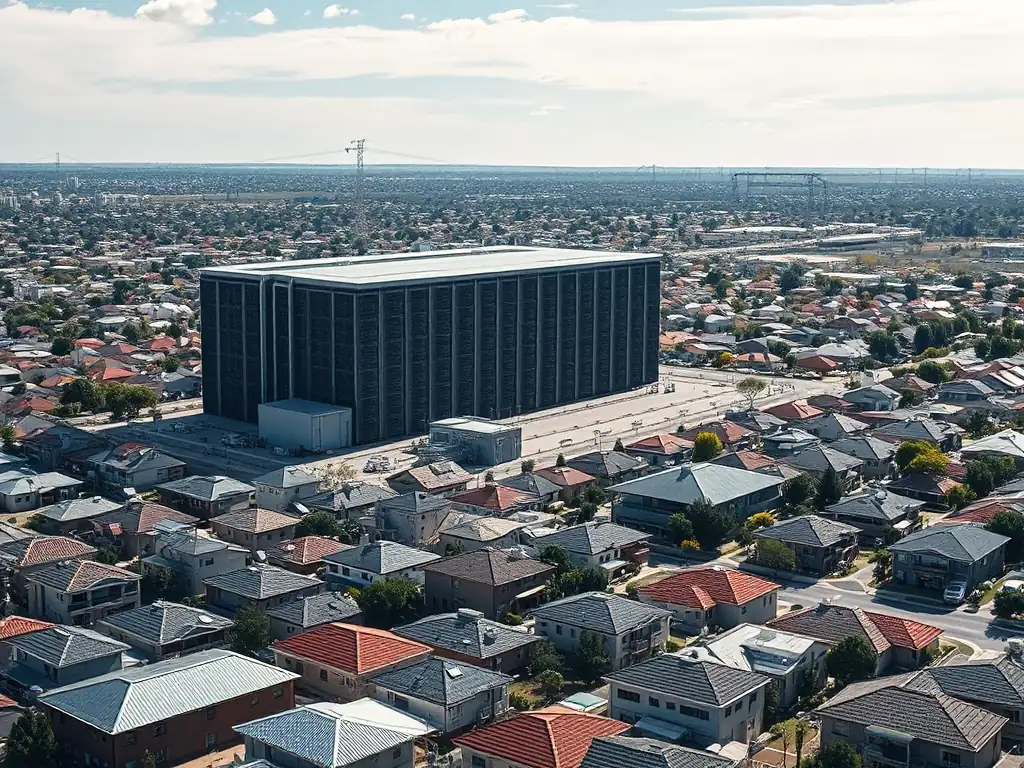
The expansion of AI datacentres is directly linked to rising housing costs in Australia through increased demand for land, labour, and rental accommodation in areas where these facilities are being built. Large datacentre projects require significant land footprints, often in or near urban centres or strategically located near power grids and fibre optic networks. This competition for land drives up its price, impacting the affordability of both commercial and residential development. Developers looking to build new housing may find themselves outbid by datacentre operators for prime locations, or face significantly higher land acquisition costs, which are then passed on to homebuyers in the form of increased property prices. Furthermore, the construction phase of AI datacentres attracts a large number of workers, many of whom are not local to the area. This influx of temporary or permanent residents seeking housing dramatically increases the demand for rental properties, leading to higher rents and reduced availability for existing residents and other new incomers. In popular development zones, this pressure can be so intense that it effectively prices out long-term residents and makes it extremely difficult for essential workers and young families to find affordable accommodation. For instance, in regions like Western Sydney, where significant datacentre investment is occurring, local reports indicate a noticeable tightening of the rental market and a surge in rental prices over the past two years (Source: NSW Government Planning Reports).
The economic boom generated by AI datacentre construction and operation also leads to increased employment opportunities in the vicinity. As more jobs are created, more people are attracted to the area, further intensifying the demand for housing. This sustained increase in population density, driven by the need for a local workforce to support these tech-centric industries, creates a long-term pressure on the housing market that can outlast the initial construction boom. The desirability of these regions also increases due to the promise of economic growth and high-paying jobs, making property investment more attractive and potentially leading to speculative buying, further inflating prices. The connection is not limited to direct demand; it extends to the overall economic climate fostered by these developments. Areas with substantial AI datacentre investment often experience a general uplift in economic activity, attracting ancillary businesses and services that also require space and employees, adding another layer to the demand for both commercial and residential real estate. For Australian homebuyers, particularly those in regions experiencing rapid datacentre expansion, this means facing a more challenging and expensive market. The practical takeaway is to research potential areas of interest for housing by looking at planned or ongoing large-scale infrastructure projects, as these can be significant indicators of future housing price trends and rental market competitiveness.
Which Australian regions are experiencing the most AI datacentre development?
Several Australian regions are experiencing significant AI datacentre development, driven by factors such as access to abundant and affordable power, robust fibre optic networks, proximity to major population centres, and government incentives. Sydney, particularly Western Sydney, has emerged as a key hub due to its large existing digital infrastructure, access to a skilled workforce, and government support for technology precincts. Areas like Kemps Creek and Derrimut in Victoria are also seeing substantial investment. These locations are attractive because they offer the necessary land availability and are well-connected to national and international data links. Additional resources are available at the RBA official interest rate data. Melbourne, including its outer suburbs like Derrimut and Truganina, is another major centre for datacentre growth. Victoria’s state government has actively promoted investment in digital infrastructure, recognising the economic potential of datacentres for job creation and technological advancement. The availability of large industrial zones with access to reliable power from the state’s energy grid makes these areas ideal for large-scale datacentre campuses. The clustering of these facilities in specific precincts is often strategic, allowing for shared infrastructure benefits and operational efficiencies.
Beyond the major east coast cities, regions with developing digital infrastructure and a strategic outlook are also attracting attention. Perth, Western Australia, is increasingly being recognised for its potential, particularly due to its geographical position for trans-Pacific cable landings and its access to energy resources. Queensland, with its growing population and economic diversification efforts, is also seeing interest in areas around Brisbane. These emerging hubs benefit from lower land acquisition costs compared to the established markets and are often supported by state-level planning initiatives aimed at attracting high-tech industries. A contributing factor to this geographic concentration is the need for redundancy and proximity to end-users. Businesses that rely heavily on AI and cloud computing prefer datacentres located within a reasonable distance to minimise latency (the delay in data transfer). Therefore, regions close to major economic and population centres, which also have the necessary industrial land and energy supply, are naturally favoured. The Australian government’s National Reconstruction Fund, which aims to invest in critical technology and advanced manufacturing, is also likely to spur further investment in datacentre infrastructure across various regions. The takeaway for those looking at property investment or career opportunities is to monitor these key development zones, as they are likely to experience significant economic and demographic shifts.
How much do AI datacentres cost to build and operate in Australia?
The cost to build and operate AI datacentres in Australia is substantial, with figures ranging from hundreds of millions to over a billion dollars for large-scale facilities, primarily driven by the specialised hardware and infrastructure required. Building a hyperscale AI datacentre can involve expenditures of $500 million to $1.5 billion AUD, depending on its size, capacity, and the specific technological components it houses. This significant investment covers the land acquisition, construction of the building, installation of cutting-edge servers, GPUs, high-speed networking equipment, and sophisticated cooling and power systems, including backup generators and uninterruptible power supplies (UPS). The specialised nature of AI computing means that the hardware alone, particularly high-performance GPUs, constitutes a major portion of the capital expenditure. Operational costs are equally significant and ongoing, with energy consumption being a primary driver. AI datacentres are incredibly power-hungry, with a single facility potentially consuming the equivalent electricity of tens of thousands of homes. Electricity bills can account for 40-60% of a datacentre’s operational expenditure. For example, a large AI datacentre could incur monthly electricity costs in the millions of dollars, depending on energy prices and operational intensity (Source: Energy Consulting Report, 2023). Beyond energy, other operational expenses include staffing (highly skilled technicians, IT specialists, security personnel), hardware maintenance and upgrades, software licensing, cooling system upkeep, and security measures. The rapid pace of technological advancement also means that hardware often needs to be refreshed or upgraded within a few years to remain competitive, adding to long-term costs.
The cost of network connectivity is another crucial element. High-bandwidth, low-latency connections are essential for AI workloads, requiring significant investment in fibre optic infrastructure and associated services. Renting or laying dedicated fibre optic cables to and from major internet exchange points can add millions to the cost, both in initial setup and ongoing service fees. Furthermore, the specialised cooling systems required to manage the intense heat generated by AI hardware are complex and energy-intensive, representing a significant capital and operational cost. These systems are far more advanced than those used in traditional datacentres, often involving liquid cooling solutions or highly efficient air-cooling technologies that require constant maintenance and energy input. The Australian context adds specific considerations to these costs, including local labour rates, material availability, regulatory compliance, and the cost of energy, which can be higher compared to some international locations. For instance, the relatively high cost of electricity in some Australian states can significantly impact the operational expenditure of a power-intensive AI datacentre. The takeaway for businesses and investors considering entry into this market is the need for thorough financial modelling that accounts for both the massive upfront capital investment and the substantial, ongoing operational expenses, particularly concerning energy and hardware lifecycle management. Understanding these costs is critical for assessing the viability and profitability of AI datacentre projects in Australia.
What are the risks of rapid AI datacentre growth on Australia’s property market?
Rapid AI datacentre growth poses several significant risks to Australia’s property market, primarily through increased land competition, infrastructure strain, and potential over-reliance on a single sector. The substantial land requirements for datacentres can divert prime real estate away from residential and commercial development, particularly in strategically located areas with access to power and connectivity. This competition for land drives up prices, making it more expensive for developers to build much-needed housing, thus exacerbating affordability issues. If a significant portion of developable land in key areas is dedicated to datacentres, it can stifle housing supply, leading to price escalations and increased rental stress for the general population. Another risk is the strain placed on local infrastructure. While datacentres bring economic benefits, their massive power consumption demands can stress existing electricity grids, potentially leading to price hikes for all consumers and even supply reliability issues if not managed effectively. Increased water usage for cooling systems can also strain local water resources, particularly in drier regions. Furthermore, the specialised nature of datacentre development means that areas heavily invested in this sector might become economically vulnerable if the AI industry experiences a downturn or technological shifts that render existing facilities obsolete. This creates a risk of “stranded assets” – properties that were built for a specific, high-demand purpose but lose their value rapidly.
The concentration of investment in datacentres can also lead to an over-reliance on a single industry for regional economic growth and property market performance. If the demand for AI computing power were to plateau, or if a major datacentre operator were to withdraw from an area, it could lead to a sudden and sharp decline in property values and rental rates in that region. This lack of diversification makes the local property market susceptible to the fortunes of the AI sector. For example, a significant reduction in AI development due to global economic shifts or regulatory changes could lead to job losses and decreased demand for housing in affected areas, creating a localized property downturn. Moreover, the rapid build-out of datacentres can lead to significant changes in local community character, impacting residential desirability. The industrial nature of these facilities, along with increased truck traffic for maintenance and hardware delivery, can detract from the liveability of surrounding residential areas. This can indirectly affect property values as residents may seek locations further away from datacentre clusters. The takeaway for Australian property investors and homeowners is to carefully consider the long-term implications of datacentre development in their chosen locations, looking beyond the immediate economic boost to understand the potential risks of land scarcity, infrastructure strain, and industry-specific vulnerabilities that could impact property market stability.
How can Australian homebuyers protect themselves during the AI datacentre boom?
Australian homebuyers can protect themselves during the AI datacentre boom by adopting a strategic approach that focuses on informed decision-making, diversified investments, and prudent financial planning. Firstly, thorough research into local market conditions is paramount. Before purchasing a property, buyers should investigate planned or existing AI datacentre developments in the area. Understanding how these projects might impact local land values, infrastructure, and rental markets can help in making a more informed purchase decision. For instance, buying in a region experiencing significant datacentre growth might offer potential for property value appreciation, but it’s crucial to balance this with the risk of increased competition for resources and potential infrastructure strain. Secondly, diversification is key. While AI datacentres can drive economic growth, relying solely on the property market’s performance in these specific areas can be risky. Homebuyers might consider diversifying their property portfolio if they are investors, looking at different types of housing (e.g., family homes versus apartments) or different geographic locations that are less directly impacted by datacentre development. For owner-occupiers, it’s about ensuring their primary residence is not unduly exposed to sector-specific risks. This means considering proximity to essential services, employment opportunities outside the tech sector, and general liveability factors that contribute to long-term property value stability.
Thirdly, prudent financial management and securing favourable financing are crucial. Given the potential for rising interest rates and inflationary pressures linked to large infrastructure projects, homebuyers should aim to secure pre-approval for mortgages and lock in competitive interest rates where possible. Maintaining a healthy emergency fund and reducing non-essential debt can provide a financial buffer against unexpected economic shifts. Understanding your borrowing capacity and ensuring you can comfortably afford repayments even if interest rates rise further is a vital protection mechanism during periods of economic uncertainty driven by large-scale development. Finally, focusing on properties in areas with diverse economic bases and strong community infrastructure can offer a degree of insulation from sector-specific booms or busts. This involves looking beyond the immediate allure of high-growth tech precincts and considering established suburbs with good schools, reliable public transport, and a mix of employment opportunities. The practical takeaway for Australian homebuyers is to approach the market with a long-term perspective, combining diligent local research with sound financial strategies and a commitment to diversification, ensuring their home purchase is a secure asset rather than a speculative gamble influenced by the rapid, but potentially volatile, AI datacentre boom.