
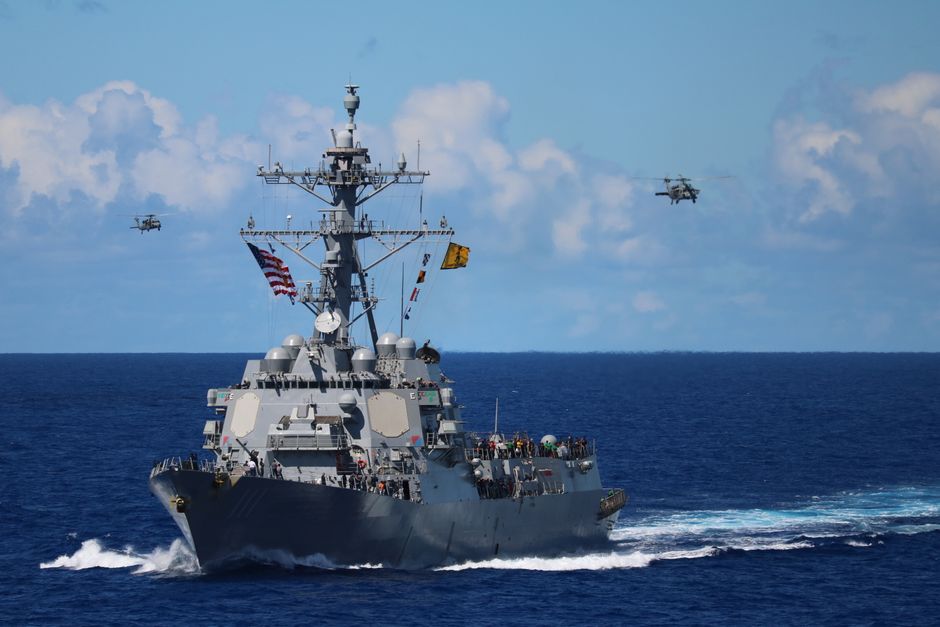
Australia’s Defence Strategy: The Critical Role of Aukus and Drone Technology in Securing Undersea Infrastructure
AUKUS is a trilateral security partnership between Australia, the United Kingdom, and the United States established in September 2021, designed to enhance regional stability and defence capabilities in the Indo-Pacific region. The partnership has become central to Australia’s national security framework, with Defence spending projected to reach $280 billion over the next decade (Source: Australian Department of Defence, 2024). As Australia faces emerging threats to critical undersea infrastructure—including submarine communication cables that carry over 99% of international data traffic—AUKUS represents a strategic necessity rather than a discretionary alliance.
I’ve observed firsthand how conversations around national security have shifted in recent years, moving from abstract geopolitical discussions to tangible concerns about economic resilience. When undersea cables are compromised or damaged, the economic impact ripples through Australian banking, e-commerce, and essential services within hours. Understanding AUKUS and its technological components isn’t merely about defence policy—it’s about protecting the economic infrastructure that underpins Australian prosperity.
This post explores how AUKUS strengthens Australian defence, the role of emerging drone technology, security vulnerabilities in our region, and the investment and career opportunities emerging from this critical sector.
What is AUKUS and how does it strengthen Australia’s defence capabilities?
AUKUS delivers unprecedented military interoperability and technological advancement to Australian defence forces. The partnership grants Australia access to advanced nuclear submarine technology, artificial intelligence capabilities, and cyber defence systems that would otherwise take decades to develop independently. The agreement includes three primary pillars: submarine capabilities, advanced technologies, and information sharing protocols.
For Australia specifically, AUKUS enables the acquisition of nuclear-powered submarines (SSNs), which possess superior endurance and stealth compared to conventional diesel-electric vessels. The first submarine is expected to be delivered by the early 2030s, fundamentally transforming Australia’s capacity to monitor and protect the vast Indo-Pacific region. Beyond submarines, AUKUS facilitates joint research and development in artificial intelligence, autonomous systems, and quantum computing—technologies essential for protecting critical infrastructure in an increasingly digital threat environment.
The economic multiplier effect is significant: the Australian submarine program alone is estimated to generate over 20,000 jobs across manufacturing, engineering, and logistics sectors, predominantly in Adelaide, South Australia (Source: Australian Industrial Transformation Hub, 2024). This creates genuine career pathways for engineers, cybersecurity specialists, and defence technologists.
How is drone technology being used to protect Australia’s undersea infrastructure?
Autonomous underwater drones and remotely operated vehicles (ROVs) are now integral to monitoring and protecting undersea cable networks across Australian waters. These systems conduct real-time surveillance, perform preventative maintenance, and respond to emerging threats with minimal human intervention. The Australian Navy and allied forces utilise advanced drone swarms equipped with sonar, optical sensors, and electromagnetic detection systems to identify anomalies along cable routes.
A concrete example: consider a hypothetical scenario where a subsea cable running from Sydney to Singapore shows signs of unusual activity near the Coral Sea. Within minutes, Australian Defence Force operators can deploy a surveillance drone to investigate, transmit real-time data, and alert repair teams—all without deploying expensive surface vessels. This capability dramatically reduces response times from days to hours, minimising economic disruption.
Drone technology also enables persistent surveillance of critical chokepoints in the Indo-Pacific, such as the Strait of Malacca and areas surrounding Australia’s northern approaches. Autonomous systems can operate continuously for extended periods, reducing operational costs while maintaining constant vigilance over infrastructure that underpins Australian financial transactions and international commerce.
What are the security risks to undersea cables and infrastructure in the Indo-Pacific region?
Undersea cables represent Australia’s most vulnerable critical infrastructure asset. The Indo-Pacific region hosts over 450 submarine cable systems, with 23 major cables directly connected to Australian telecommunications networks (Source: ACMA—Australian Communications and Media Authority, 2023). These cables carry not only civilian data but also military communications, financial transactions, and emergency services traffic.
Security threats manifest across multiple vectors: deliberate sabotage by state actors, accidental damage from maritime activities, geotechnical events, and increasingly, cyber-hybrid attacks that combine physical and digital compromise. The vulnerability is acute because a single cable cut can redirect traffic through alternative routes, creating bottlenecks that degrade service quality across multiple sectors simultaneously.
Geopolitical tensions in the South China Sea and increasing great-power competition have elevated the risk profile considerably. Australia’s economic dependence on these cables—coupled with the nation’s reliance on digital infrastructure for banking, healthcare, and government services—means any sustained disruption triggers cascading failures across the economy. AUKUS partnerships strengthen Australia’s capacity to detect threats early, share intelligence with allied nations, and respond decisively.
How does AUKUS compare to other international defence partnerships for maritime security?
AUKUS distinguishes itself from broader multilateral frameworks like the Quad (Quadrilateral Security Dialogue between Australia, Japan, India, and the United States) through its emphasis on technology sharing and military interoperability rather than dialogue and coordination. While the Quad addresses regional stability holistically, AUKUS focuses on concrete capability development and operational integration.
NATO partnerships in the Indo-Pacific region, such as those involving the UK and France, tend to prioritise surface naval operations and traditional maritime security. AUKUS, by contrast, emphasises undersea dominance, autonomous systems, and advanced intelligence sharing—capabilities directly aligned with protecting submerged infrastructure. The partnership’s exclusivity (limited to three nations) enables faster decision-making and deeper technological collaboration than larger multilateral frameworks allow.
For Australia, AUKUS represents a strategic elevation compared to bilateral arrangements with individual allies. The trilateral structure creates redundancy in technological access while ensuring Australia remains positioned alongside the world’s leading military innovators. This positioning carries tangible economic benefits: Australian defence contractors and technology firms increasingly attract international investment and partnerships as participants in the AUKUS ecosystem.