
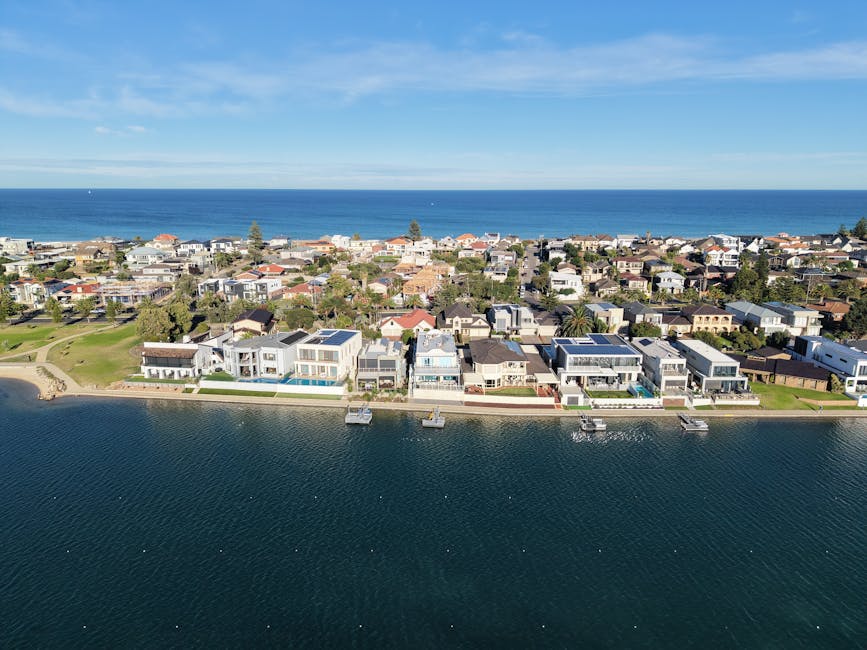
Navigating the Australian Property Market: Expert Insights on Falling House Prices
The Australian property market is a complex landscape shaped by economic cycles, interest rates, and supply-demand dynamics. Over the past 18 months, many regions have experienced notable price corrections, with some areas seeing declines of 10–15% from their peaks (Source: CoreLogic, 2024). Understanding these shifts is essential for anyone considering a property purchase or investment in Australia today.
Falling prices don’t automatically spell disaster. For strategic buyers, they create genuine opportunities to enter the market at more reasonable valuations. For sellers, they demand realistic pricing and stronger marketing. For investors, downturns test strategy and patience. The key is knowing how to respond.
I’ve watched many Australians panic during market corrections, only to regret their inaction years later. The property market rewards those who understand the mechanics and act with clear objectives.
What factors are causing house prices to fall in the Australian property market?
Multiple forces have converged to pressure Australian property values. The Reserve Bank of Australia raised the official cash rate from 0.1% to 4.35% between May 2022 and October 2023, directly increasing borrowing costs (Source: RBA). Higher mortgage repayments reduce buyer purchasing power and dampen demand across most markets.
Supply constraints in desirable locations, combined with migration patterns shifting toward regional areas, have created pockets of oversupply in outer suburbs. Affordability stress means fewer first-time buyers can access credit, while investor activity has softened. Construction delays and building cost inflation add further pressure on new property valuations.
How can buyers take advantage of falling house prices to invest strategically?
Falling prices create a buyer’s advantage—but only for those positioned to act. Pre-approval for a mortgage removes uncertainty and strengthens your negotiating position with sellers. Motivated vendors in a slow market are often willing to accept lower offers or cover closing costs.
Consider this scenario: A buyer in Brisbane’s Southside suburbs identified a three-bedroom home listed at $550,000 in March 2024. Six months earlier, a comparable property sold for $620,000. The buyer negotiated successfully at $525,000, securing a $95,000 saving compared to the earlier sale. This advantage only materialised because the buyer understood local market dynamics and acted decisively.
Focus on fundamentals: location sustainability, rental yield potential (if investing), council growth plans, and schools. Falling prices sometimes reveal genuine value; other times they signal deeper issues in that area. Target regions with employment growth and infrastructure investment. Avoid catching a “falling knife”—a property in genuine structural decline.
What are the risks of purchasing property during a market downturn in Australia?
Timing the bottom of a market cycle is nearly impossible. Prices can fall further than expected, leaving you underwater—owing more than the property’s value. If you need to sell within five years, negative equity becomes real risk, as transaction costs (around 5–7% of sale price) compound your loss.
Interest rates may rise further, increasing your mortgage burden. Inspections and pest reports sometimes reveal expensive defects; sellers in weak markets have less incentive to negotiate repairs. Lenders also tighten criteria during downturns, making approval harder even with pre-approval.
Economic uncertainty can affect job security. Buy only if you’re confident in your income stability for the next five years minimum. Avoid overextending; stress-test your budget at a 6% interest rate, not the current rate.
Which Australian regions are experiencing the most significant property price declines?
The Australian property market shows uneven pain across regions. Outer suburbs of Sydney, Melbourne, and Brisbane—areas that surged during the pandemic boom—have seen corrections of 12–18% from their 2022 peaks (Source: Domain Group, 2024). Suburbs beyond 40 kilometres from CBDs are particularly affected as remote work normalises and amenity-focused buyers reassess priorities.
Inner-city and established beachside pockets have held value better, supported by international migration and investor demand. Regional centres like Hobart and regional NSW experienced strong growth earlier but are now plateauing. Perth has remained more resilient due to resources sector activity.
NSW regions like the Central Coast and Illawarra saw significant corrections, while some Northern Rivers areas continue facing headwinds. Study your target region’s fundamentals before assuming local trends mirror national patterns.
The Australian property market rewards informed decision-making. Prices falling doesn’t mean buying is always smart—context and strategy matter. Whether you’re a first-time buyer, upgrader, or investor, understand your local market’s drivers, stress-test your finances, and align your purchase timeline with your life goals.
Get professional advice. Speak with a mortgage broker about genuine borrowing capacity, not maximum serviceability. Engage a property valuer to confirm fair pricing. Research local council planning documents and infrastructure commitments. The difference between a smart purchase and a costly mistake often comes down to due diligence.
Ready to explore your options? Start with a free mortgage pre-approval assessment and a detailed suburb analysis tailored to your goals. Your next steps shape your financial future.