
Facial recognition privacy: What WA residents need to know
Facial recognition privacy concerns have intensified as Western Australia police launch real-time surveillance trials. At BanksiaPulse, we monitor how these technological shifts impact your personal data security. On July 2, 2026, WA Police Commissioner Col Blanch debuted a system at Mirrabooka bus station capable of scanning hundreds of faces a minute (Source: Guardian Australia, 2026). As this technology becomes more common across Australia, understanding your rights regarding biometric data collection is essential for every resident.
- What is facial recognition technology and how does it work in law enforcement?
- How is WA Police currently using facial recognition in their trial program?
- What are the main privacy risks associated with facial recognition systems?
- How does facial recognition accuracy vary across different demographic groups?
- What legal regulations govern facial recognition use by police departments?
- How does the WA Police facial recognition trial compare to other states’ programs?
- Frequently Asked Questions
What is facial recognition technology and how does it work in law enforcement?
Facial recognition technology functions by mapping facial features from live video feeds to create a digital template that is instantly cross-referenced against criminal databases. Law enforcement agencies utilize these algorithms to identify individuals in crowded public spaces, such as transit hubs or sports stadiums, without requiring manual intervention. The system relies on biometric markers—unique physical characteristics—to distinguish between thousands of people in real-time, often flagging individuals of interest to nearby officers. This process transforms public surveillance from a reactive tool, which typically requires reviewing footage after an incident, into a proactive measure intended to intercept suspects on the spot. While proponents argue this speed enhances public safety, the reliance on automated matching systems introduces significant technical complexities regarding how machines interpret human appearances.
For law enforcement, the primary utility lies in the efficiency of processing vast amounts of visual data that would be impossible for human operators to monitor simultaneously. When a camera at a location like Mirrabooka bus station captures a face, the software identifies nodal points, such as the distance between eyes or the shape of the jawline, to generate a mathematical representation. This data is then compared against high-risk or missing persons lists to generate an alert. The speed of this calculation is critical for operational effectiveness, allowing police to respond to potential threats before a person leaves the vicinity. However, the reliance on these automated tools requires a high degree of confidence in the underlying software’s ability to maintain high precision under variable lighting, crowd density, and environmental conditions common in busy transport interchanges.
In the broader Australian context, the integration of these systems into police operations mirrors international trends toward “smart policing,” where digital infrastructure supports traditional patrol methods. While the objective is to reduce crime rates and improve response times, the shift necessitates a conversation about the balance between state surveillance capabilities and individual anonymity in public life. For residents, understanding that your likeness may be scanned and stored during daily activities is the first step in engaging with broader debates about digital privacy. It is important to remember that as the technology evolves, the legislative frameworks governing its use must keep pace to ensure that public trust is maintained while security goals are achieved. Staying informed about how your local police department manages these tools is a fundamental aspect of civic participation in an increasingly digitised society.
How is WA Police currently using facial recognition in their trial program?
The WA Police facial recognition trial focuses on real-time identification using cameras mounted on mobile assets, such as marked police vans, to monitor high-traffic areas. By deploying this technology at busy locations like Perth’s Mirrabooka bus station, officers can instantaneously scan hundreds of faces per minute to cross-reference profiles against internal police systems (Source: Guardian Australia, 2026). This trial represents a shift toward more mobile, dynamic surveillance rather than relying solely on fixed-position CCTV infrastructure. The program aims to assess the effectiveness of these tools in live field environments, providing feedback to leadership on whether the technology can realistically assist in identifying individuals during routine patrol operations. By observing the technology in a high-density, real-world setting, the force aims to determine if the software delivers actionable intelligence that outweighs the costs and logistical challenges of implementation.
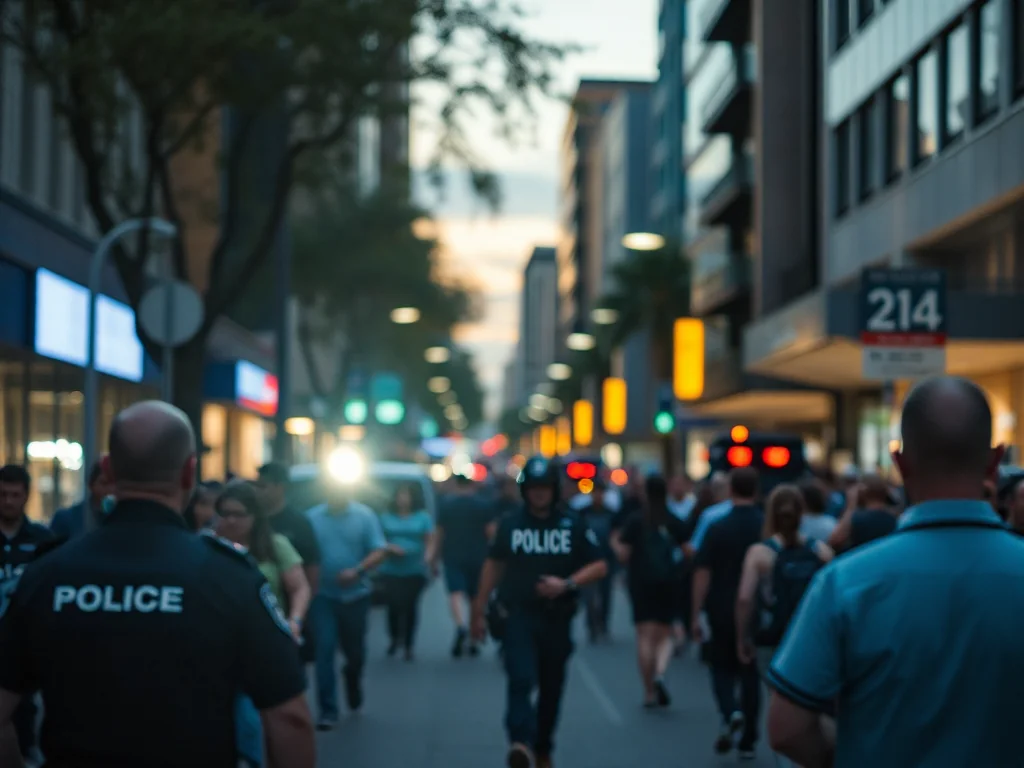
Beyond the technical trial, the program serves as a pilot for integrating biometric scanning into everyday police interactions. Officers stationed behind television microphones at the Mirrabooka launch illustrated how the system provides an immediate signal when a match occurs, prompting potential police intervention. This creates a scenario where a resident moving through a public transport hub could be flagged by the system, leading to a direct encounter with law enforcement. Because these cameras are mounted on vehicles, they offer the flexibility to move between different hotspots depending on crime reporting trends or public events. This mobility makes the surveillance footprint highly unpredictable for the general public, as the presence of a marked police van could signify a temporary, localized increase in biometric monitoring that disappears once the vehicle departs the scene.
For Western Australians, this pilot raises questions about the scope of surveillance and the specific criteria for being added to a “watch list” for cross-referencing. While the police commissioner has stated that such technology can enhance the freedoms and privacy of the community by making spaces safer, the public remains divided on the extent to which their daily movements should be tracked (Source: Guardian Australia, 2026). Residents should be aware that the trial is currently in an evaluation phase, meaning policies and protocols regarding data retention and oversight may be subject to change based on the outcomes observed. To track the official progress of these programs, you should visit the Western Australia Police Force official website for any updates regarding trial policies, privacy impact assessments, or public consultation opportunities as they become available throughout the remainder of 2026.
What are the main privacy risks associated with facial recognition systems?
Privacy risks center on the potential for “function creep,” where technology deployed for a specific purpose, such as finding a missing person, gradually expands to monitor peaceful protesters or track general public movement. Critics argue that even if a system is intended for security, the permanent collection and potential storage of biometric data create a significant vulnerability if that data is breached or misused. The “chilling effect”—where individuals change their behavior, such as avoiding public demonstrations or gatherings, because they fear they are being constantly tracked—remains a major concern for civil liberties advocates. Additionally, the lack of transparency regarding how long data is held and who has access to it can erode public confidence in state institutions, particularly when surveillance occurs without an individual’s explicit consent or knowledge in a public space.
False alerts are another significant technical risk, as any discrepancy in the algorithm can lead to an innocent person being wrongly flagged for police intervention. If the system incorrectly identifies an individual, the resulting interaction with officers can cause unnecessary distress, confusion, and potential social stigma for the person involved. For instance, imagine a commuter simply waiting for a bus who is suddenly approached by police due to a faulty algorithmic match; this experience highlights the human cost of technical inaccuracies. Given that humans are prone to cognitive bias, an officer might be more inclined to trust the “data” from the screen rather than their own observations, creating a feedback loop of error. This makes the accuracy of the system not just a technical issue, but a critical matter of fundamental human rights and due process for all citizens.
Data security is a further, often overlooked, dimension of the privacy debate, as biometric templates represent sensitive information that cannot be changed like a password if stolen. Once your facial geometry is compromised in a database leak, the damage is effectively permanent, leaving you vulnerable to identity theft or unauthorized tracking by third parties. Protecting this data requires adherence to strict cybersecurity standards, yet public trust often rests on the transparency of the organizations managing these records. To manage your digital footprint, you can check the latest information from the Australian Bureau of Statistics on data privacy trends and household technology use. Understanding these risks is a vital component of your personal financial and digital health, especially as you interact with government services that are increasingly moving toward biometric verification systems in the coming years.
How does facial recognition accuracy vary across different demographic groups?
Accuracy in facial recognition technology is not uniform, as many algorithms show variance in error rates when processing different skin tones, genders, and age groups. Industry research has consistently indicated that systems trained on non-diverse datasets often struggle to correctly identify people from minority ethnic backgrounds, leading to higher rates of false positives for these demographics. This disparity is often referred to as algorithmic bias, which stems from the way the software was originally developed and the images used to train the machine learning models. If the training data lacks representation, the mathematical features extracted by the computer are inherently skewed toward the majority demographic, rendering the system significantly less reliable for everyone else. This uneven performance is a well-documented technical limitation that complicates the deployment of such systems in diverse Australian urban centers.
For residents, this means the risk of being a “false positive” is not equally distributed across the population. A person from a demographic group that the software struggles to recognize is statistically more likely to experience a disruptive or negative interaction with law enforcement due to an algorithmic mistake. Such biases do not just represent a technical flaw; they introduce the risk of systemic discrimination, where certain groups are disproportionately subjected to police scrutiny because of how the technology interprets their features. In a multicultural country like Australia, the failure to account for these variances can significantly undermine the legitimacy of surveillance programs. Ensuring that any technology utilized by the state is independently audited for fairness is a critical safeguard against perpetuating existing social inequalities through the use of automated, high-stakes surveillance tools.
To address these inaccuracies, developers often implement “confidence thresholds,” which determine how closely a match must resemble a stored profile before an alert is triggered. While raising this threshold can reduce the number of false positives, it may also lead to more “false negatives,” where an actual suspect is missed by the system. This inherent trade-off shows that facial recognition technology is far from an infallible tool and requires constant human oversight. For you, the takeaway is to remain aware that automated systems are not objective arbiters of identity. If you ever find yourself wrongly flagged by such a system, it is crucial to remain calm and ask for the procedure for verifying your identity through manual means, as you have the right to request clarification on why a digital system has flagged you in a public setting.
What legal regulations govern facial recognition use by police departments?
Legal regulations governing facial recognition in Australia are a complex patchwork of state-based surveillance laws, privacy acts, and judicial interpretations that have not yet fully crystallized into a unified national standard. Currently, police departments must operate within the bounds of their state’s specific legislative frameworks, which dictate how video surveillance can be used to monitor the public. While the Privacy Act 1988 provides some coverage, many government agencies and law enforcement bodies are subject to different, and sometimes more permissive, exemptions regarding the collection of biometric data for law enforcement purposes. This creates a regulatory environment where the rules of engagement are often defined by internal policy and local ministerial guidelines rather than explicit, national-level statutes that specifically address the unique ethical challenges of real-time biometric tracking.
One major area of contention is whether the use of live facial recognition constitutes an “unreasonable search” or a breach of common law rights to privacy, as individuals are being scanned without a warrant or suspicion of wrongdoing. Critics frequently call for more specific legislative oversight that requires a warrant before biometric monitoring can be deployed in a specific location or against a specific group. Without clear, legally binding protections, the use of these tools is left to the discretion of police commissioners and government ministers. This leaves the public in a state of uncertainty, as the rules could be tightened or relaxed depending on the political climate or changing interpretations of what constitutes “public safety” versus “privacy infringement.” Establishing a clear legal baseline is necessary to ensure that the deployment of these technologies does not bypass traditional democratic checks and balances.
For your own protection, it is vital to keep track of any legislative changes in your state, as parliament may periodically debate amendments to surveillance laws in response to public backlash. You can monitor the official progress of such bills through the parliament website of your state or territory to see how these regulations are evolving. Because the technology is advancing faster than the law, the current legal landscape is essentially reactive. If you are concerned about how your data is being handled, you can also look into the policies of your local police force, which are usually published online as part of their commitment to transparency. Being an informed citizen involves recognizing that the law in this area is a work in progress and that your voice in public consultations can influence how these tools are regulated in the future.
How does the WA Police facial recognition trial compare to other states’ programs?
The WA Police trial is part of a growing wave of biometric integration seen across Australian state jurisdictions, though each state adopts its own specific approach to implementation and public transparency. While some states have invested heavily in fixed CCTV networks with biometric capabilities, Western Australia’s recent move to use mobile, van-mounted cameras highlights a preference for operational flexibility. Other jurisdictions have faced similar public outcry and intense media scrutiny, often leading to temporary pauses or the introduction of stricter privacy impact assessments before expanding their use of these technologies. Comparing these programs reveals a fragmented landscape where the effectiveness, privacy safeguards, and public acceptance levels vary widely depending on how the police force in each state decides to communicate their intentions to the community.
In contrast to some international jurisdictions that have moved to outright ban the use of facial recognition in public spaces, Australia has generally opted for a trial-and-evaluate model. For instance, while some states have focused their trials on counter-terrorism or specific high-risk areas, the Western Australian approach is notably visible, having been unveiled publicly behind a bank of microphones at a central transport hub (Source: Guardian Australia, 2026). This visibility creates a different level of public awareness compared to programs that are rolled out quietly without significant fanfare. The variation between states also extends to how long biometric data is retained; some forces may delete data immediately if no match is found, whereas others may hold onto records for further investigative purposes, creating a postcode lottery regarding your biometric privacy.
If you travel across state lines, it is worth noting that your privacy rights regarding surveillance may change based on where you are. Residents who are particularly concerned about facial recognition privacy should be aware that there is currently no single Australian standard that mandates uniform privacy protections across every state force. Instead, each police department develops its own policies. To get a better sense of how your specific state compares, you can look for the “Annual Report” or “Privacy Policy” sections on your state’s police website, which often provide details on what biometric data is being collected and the purposes for which it is used. Staying engaged with these policy documents is a practical way to understand how your local environment compares to the national trend of increased biometric monitoring.