
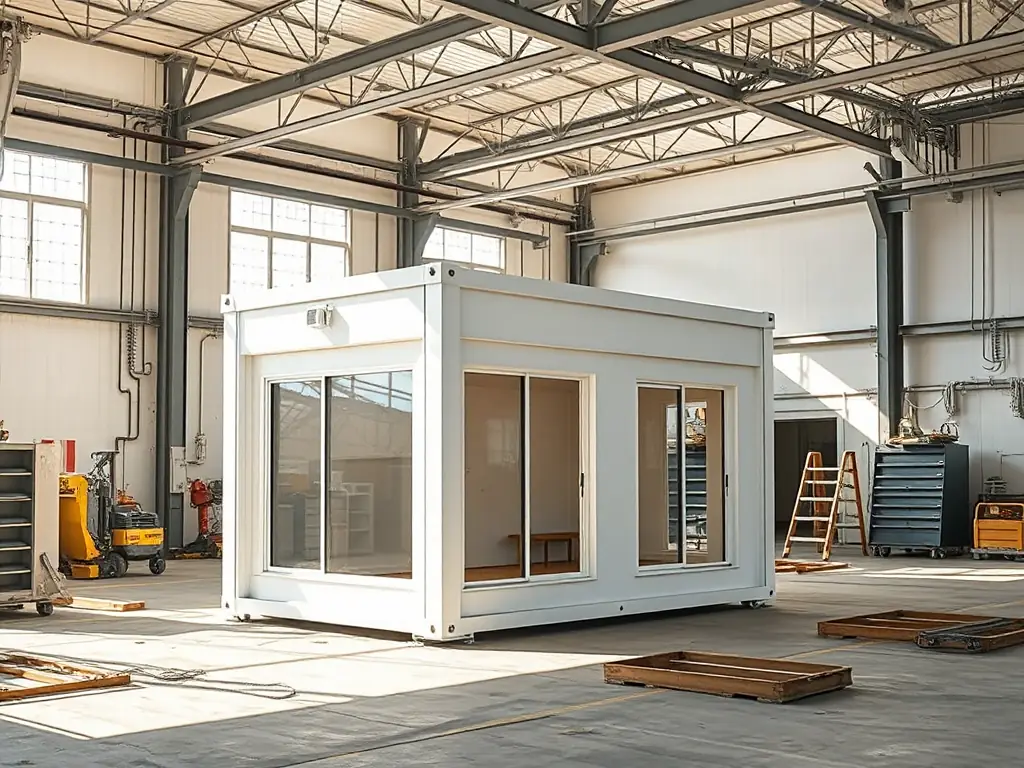
Factory-built homes: The Future of Australian Housing
Factory-built homes are residential dwellings manufactured in off-site controlled environments before being transported to their final location for assembly. BanksiaPulse reports that this approach could address Australia’s housing crisis while boosting the national industrial base. According to a report by the John Curtin Research Centre released on July 25, 2026, this strategy offers a once-in-a-generation opportunity to reverse decades of deindustrialisation. With demand for affordable housing rising, understanding these efficient construction methods is essential for all Australians (Source: John Curtin Research Centre, 2026).
- What exactly are factory-built homes and how do they differ from traditional construction?
- How does factory-built home construction reduce costs compared to site-built homes in Australia?
- What are the main environmental benefits of manufacturing homes in controlled factory settings?
- How can factory-built homes boost Australia’s manufacturing sector and create jobs?
- What are the potential risks and limitations of factory-built homes in the Australian market?
- What quality standards and certifications should buyers look for in Australian factory-built homes?
- Frequently Asked Questions
What exactly are factory-built homes and how do they differ from traditional construction?
Factory-built homes are produced through modular or manufactured processes where components are constructed in a controlled indoor facility rather than on an open building site. Unlike traditional construction, which relies on weather-dependent site work and complex logistics, these units are often near-complete before they leave the factory floor. This precision-based method ensures that structural integrity is maintained while significantly reducing the build timeline compared to conventional, stick-built dwellings that can take months or even years to finalise. The consistency afforded by this manufacturing environment allows for higher quality control, as every wall, floor, and roof section is engineered to exact specifications within a repeatable process (Source: ABS, 2024). By integrating these methods, the Australian housing market could see a drastic reduction in wait times for new dwelling stock, providing families with faster access to stable, quality housing solutions that are built to modern standards.
Traditional construction typically requires dozens of tradespeople to coordinate at a single location, often leading to delays caused by rain, material shortages, or subcontractor availability. Conversely, factory-built homes leverage a streamlined assembly-line workflow that runs independently of external site conditions, ensuring consistent progress throughout the year. This transition from traditional labor-intensive building practices to a more industrialised model mirrors the evolution seen in other sectors, such as automotive manufacturing. For homeowners, this means that once the site is prepared and the foundation is ready, the arrival of their home can occur in a matter of days. This shift in residential delivery offers a tangible solution to the current supply-demand imbalance seen across major Australian capitals, as evidenced by recent census data regarding dwelling density and urban growth (Source: ABS, 2024).
The distinction between these two models extends beyond mere speed; it encompasses the fundamental supply chain and resource management strategies utilized by builders. While traditional projects are susceptible to volatile site-specific costs, factory-built homes benefit from bulk material purchasing and reduced waste, as components are cut and assembled with laser-guided accuracy. This efficiency not only lowers the risk of project blowouts but also supports a more predictable budget for homebuyers who are already navigating a challenging economic environment. In the context of Australia’s need for rapid housing development, this industrial approach serves as a bridge between immediate occupant needs and long-term sustainability goals. By shifting the bulk of labor into a protected, efficient space, the sector can improve worker safety and project reliability while simultaneously addressing the shortfall of affordable residential properties required across the nation’s diverse regional and metropolitan landscapes.

How does factory-built home construction reduce costs compared to site-built homes in Australia?
Factory-built homes reduce costs by minimizing construction waste, lowering labor requirements, and accelerating the project timeline, which directly decreases interest accumulation on construction loans. When housing components are manufactured in a facility, waste is strictly controlled, and high-precision tools ensure that materials are utilized with maximum efficiency. This stands in stark contrast to traditional sites, where off-cuts and damaged supplies often add a premium to the final invoice. Furthermore, by consolidating the building process under one roof, companies can achieve economies of scale that are simply not possible on a bespoke, plot-by-plot basis. These cost savings are then passed on to the consumer, making the dream of home ownership more attainable for many Australians (Source: Treasury, 2025). As housing affordability remains a central concern, the move toward industrialised residential solutions offers a clear path toward lowering the financial barrier to entry for first-home buyers.
A significant portion of the cost benefit arises from the reduced on-site duration of the build, as time is a major driver of expenditure in residential construction. Every month that a construction site remains active requires ongoing management fees, equipment rental, and security, all of which contribute to the final price of the home. Because factory-built units arrive at the site in a near-complete state, the time spent by specialized trades on location is slashed by up to 50% in many cases. This reduction limits the impact of inflationary pressures on labor and transport costs that are currently affecting the sector. According to guidelines provided by Moneysmart’s advice on home buying, understanding the total cost of construction—including these hidden site fees—is vital for effective financial planning, especially for those working with tight deposit budgets.
The integration of modular units allows for a more predictable financial outlook, as the upfront factory pricing is often locked in early in the procurement phase. This avoids the common trap of “variation costs,” where mid-build changes or supply chain disruptions lead to significant price hikes. By choosing to build in a factory, buyers are essentially purchasing a finished product with transparent pricing, which protects them from the unpredictable nature of traditional construction markets. This financial certainty is particularly beneficial for investors or families looking to manage their cash flow without the constant fear of unforeseen expenses. As the industry matures, the potential for wider adoption of these homes could stabilise local housing prices, providing a much-needed cooling effect on the cost of new residential developments while supporting the broader goal of building more homes for the growing Australian population.
What are the main environmental benefits of manufacturing homes in controlled factory settings?
Manufacturing homes in controlled factory settings yields superior environmental outcomes by significantly reducing construction waste through precision engineering and optimizing material usage. In a traditional site-built environment, exposure to elements like wind and rain can lead to material degradation, resulting in higher volumes of waste that end up in landfills. Factories operate in climate-controlled conditions that protect materials, ensuring that every element—from timber frames to electrical conduit—is used exactly as intended with minimal scrap. This level of efficiency is a major win for the environment, as the construction industry is historically one of the largest producers of waste in Australia (Source: AIHW, 2024). By adopting these cleaner industrial methods, the residential building sector can align itself with national sustainability goals, reducing the carbon footprint associated with new home construction while simultaneously delivering high-quality living spaces to residents.
Energy efficiency represents another core environmental advantage of factory-built homes, as modern production techniques allow for superior sealing and insulation compared to many traditional homes. Because these homes are designed with digital modelling before production begins, thermal performance can be optimised to meet specific climate requirements before the first piece of insulation is even installed. This results in structures that maintain comfortable internal temperatures with significantly less reliance on heating and cooling systems. For the average Australian household, this translates to lower electricity consumption and long-term utility savings. Research into residential energy performance shows that even small improvements in thermal efficiency can lead to a drastic reduction in greenhouse gas emissions over the lifespan of a building, contributing to Australia’s broader transition toward a more sustainable energy landscape (Source: ABS, 2024).
Finally, the ability to centralise the construction process allows for better logistical management, including the sourcing of sustainable materials and the potential for recycling waste in one location. Rather than requiring multiple deliveries to various remote or difficult-to-access sites, factory-built homes can be transported as finished or near-finished modules, which reduces the total number of heavy vehicle movements. This drop in vehicle traffic and on-site activity also lowers the impact on local noise levels and air quality, making the process more harmonious for surrounding communities. As cities grow denser, the shift toward sustainable, factory-based construction will become increasingly important for maintaining the quality of urban living while protecting the environment. This holistic approach to building represents a major step forward, as it prioritises efficiency and ecological responsibility alongside the urgent need to provide affordable housing for an expanding population across our diverse country.
How can factory-built homes boost Australia’s manufacturing sector and create jobs?
Factory-built homes offer a unique pathway to reindustrialise Australia by shifting residential building labor into high-tech, steady-state manufacturing environments. Instead of seasonal and precarious site-based work, this model creates permanent, stable careers in assembly, engineering, and logistics. According to the July 2026 report from the John Curtin Research Centre, embracing this sector is a once-in-a-generation chance to rebuild the nation’s industrial capacity. By investing in regional and urban manufacturing hubs, Australia can reduce its dependency on imported building materials, keeping more capital within the domestic economy. This transition would not only create thousands of jobs across the country but also cultivate a specialized workforce that can compete globally in the high-demand modular housing market, ensuring long-term economic growth and resilience for local communities.
The rise of the modular sector serves as an engine for regional development, as manufacturing facilities are often ideally located in areas with lower land costs and existing industrial capacity. This geographic distribution creates high-quality employment opportunities outside of the major capital cities, which can help balance the economic divide between urban and regional populations. Skilled tradespeople—who might otherwise face the physical toll of traditional on-site building—can transition into factory roles that offer safer, climate-controlled environments and more consistent, predictable working hours. This shift significantly improves the quality of life for workers while attracting younger generations to the building trades. By standardising production, the industry can also invest in training and certification programs, creating a professionalised career path that supports the long-term prosperity of the Australian manufacturing sector while addressing the acute shortage of skilled workers in the broader construction industry.
Beyond direct labor, the growth of the factory-built home industry stimulates a vast ecosystem of suppliers, technology providers, and logistics firms that support the manufacturing chain. Everything from local steel fabrication to smart-home system integration is bolstered as production volume increases. As the industry scales, companies are likely to innovate, leading to further technological advancements that keep Australia at the forefront of modern construction. This multiplier effect means that every dollar invested in the domestic production of homes supports broader economic activity, which is essential for national self-sufficiency. By formalising these industrial practices, Australia can establish a robust domestic supply chain that is less susceptible to global shocks. This investment in home-grown manufacturing not only solves the immediate housing crisis but also lays the foundation for a more diverse, resilient, and high-value economy for the years to come.
What are the potential risks and limitations of factory-built homes in the Australian market?
The primary risks associated with factory-built homes in Australia include logistical constraints during transportation, rigid design limitations, and initial public perception regarding quality. Because modular units must be transported via road, the size and dimensions of each section are inherently restricted by traffic regulations and the accessibility of the final building site. If a construction site is located down a narrow, winding road or in a remote area, the cost of specialized transport could potentially offset the savings gained during the manufacturing phase. Furthermore, although customisation is becoming easier with modern technology, buyers may find that they have fewer design freedoms compared to a bespoke, architecturally-designed traditional home. Managing these expectations is a critical part of the procurement process, and buyers should thoroughly evaluate the logistics of their specific block of land before committing to a modular solution.
Public perception remains a hurdle, as some Australians still associate “prefabricated” housing with outdated, low-quality structures from previous decades. While contemporary factory-built homes are engineered to meet or exceed the National Construction Code, overcoming this stigma requires clear education for both buyers and lenders. Some traditional banks may still exhibit caution when financing homes that do not fit the conventional site-built model, potentially creating challenges for buyers securing mortgages. It is essential for prospective buyers to verify that their chosen provider is fully certified and compliant with local standards, as this will influence both the valuation and the long-term appreciation of the property. For those needing guidance on navigating these financial waters, ATO property investment guidance can provide insights on how different asset types are classified and handled for financial and tax planning purposes.
Lastly, the initial capital outlay for a factory-built home can sometimes be higher than the early stages of a traditional build because payment milestones are often structured differently. In a factory model, you are usually required to pay for the modular components early in the process as they are fabricated, whereas traditional builds have payments spread throughout the construction site progress. This can put pressure on the initial liquidity of the homebuyer. Additionally, there is the risk of “platform lock-in,” where a buyer becomes dependent on a specific manufacturer for future repairs or modifications if the home uses non-standard components or proprietary technology. Understanding these risks is necessary for anyone considering this modern alternative. By performing thorough due diligence and selecting reputable firms with a track record of successful deliveries, buyers can mitigate these issues and enjoy the significant benefits that modular construction provides.
What quality standards and certifications should buyers look for in Australian factory-built homes?
Buyers must ensure that their chosen factory-built home complies with the National Construction Code (NCC) and holds appropriate state-based building approvals, which serve as the definitive benchmark for safety and quality in Australia. Before engaging a manufacturer, it is vital to verify that they possess the necessary building licences and that their production facility undergoes regular third-party audits to guarantee adherence to rigorous structural and thermal standards. A reputable builder will always provide documentation proving that their materials meet Australian Standards (AS) for durability, fire resistance, and safety. These certifications are not merely bureaucratic formalities; they are the assurance that your home will perform correctly under local conditions, from heatwaves in the west to high-rainfall environments in the east. Always ask for recent examples of certified projects and check for any industry-specific accreditations that demonstrate a commitment to superior craftsmanship.
Another critical aspect of quality assurance is the manufacturer’s warranty, which should cover both the structural integrity of the modules and the components included within the home. Because factory-built homes are built in a controlled environment, there should be a high level of transparency regarding the components used, such as the type of wiring, plumbing, and insulation installed in the factory. Buyers should request a comprehensive list of these inclusions and ensure that they are warrantied by the manufacturer. If a manufacturer is hesitant to provide detailed information on their sourcing or building processes, this should be considered a red flag. High-quality firms will be proud to show you their factory floor, explain their quality management systems, and provide references from previous clients who have experienced the long-term performance of their modular dwellings in the field.
Finally, consider the importance of independent building inspections, which are just as necessary for factory-built homes as they are for traditional site-built homes. You should hire an independent inspector to review the modules before they are transported from the factory, as well as finalise the inspection once assembly on-site is complete. This ensures that no damage occurred during the transit phase and that the final connections—such as electrical, plumbing, and structural seams—meet all regulatory requirements. By incorporating these independent checks into your plan, you add an extra layer of security to your purchase. Remember, your home is a major financial commitment, and taking the time to verify its quality standards and certifications will protect your investment, ensuring your factory-built home remains a safe and valuable asset for many years to come.