
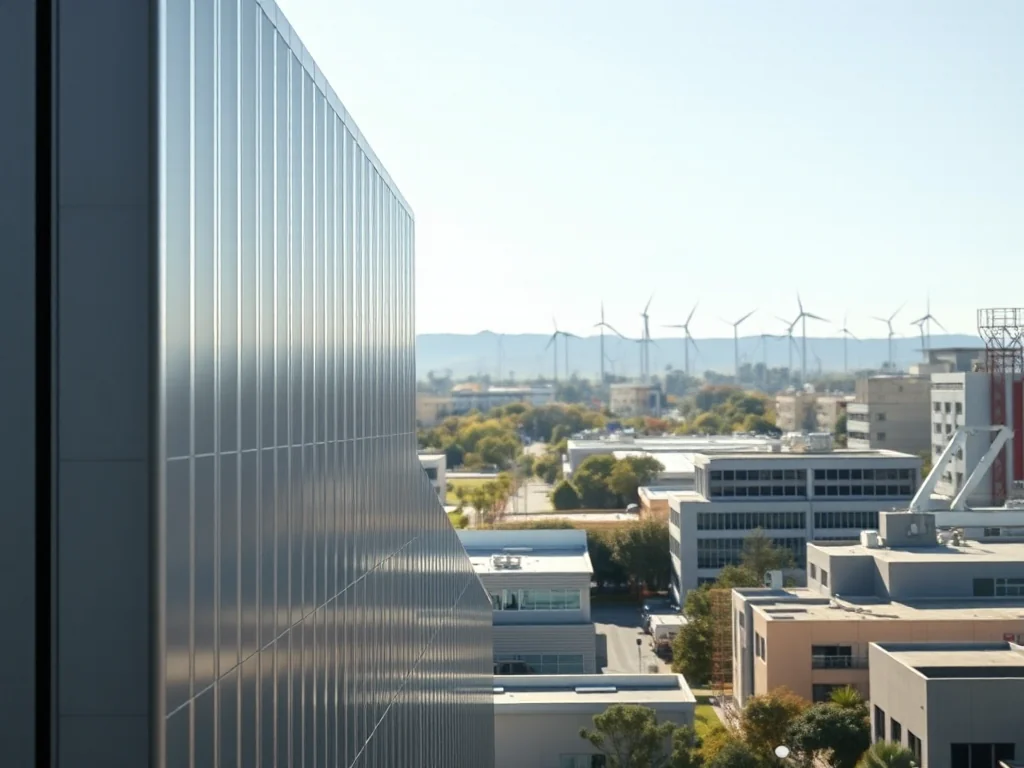
Green energy mandate impacts on Australian data centre development
A green energy mandate requires infrastructure projects, including power-intensive data centres, to source their electricity from renewable origins. At BanksiaPulse, we monitor how these shifts affect the digital economy in Australia. As of July 2026, the Australian government is scrutinising power usage, with recent reports indicating that strict net generator rules may delay facility builds (Source: AFR, 2026). With approximately 16% of global electricity consumption projected to be linked to data centres by 2030, this policy pivot creates significant local uncertainty for technology investment.
What is Australia’s green energy mandate and how does it work?
Australia’s green energy mandate represents a regulatory framework designed to ensure that large-scale energy consumers align their power consumption with renewable generation capacity. By requiring new infrastructure to prove it will not place undue strain on the national grid, the government aims to balance AI-driven growth with sustainability targets. According to the ABS official data on energy use (2025), energy intensity remains a primary concern for grid stability. The mandate essentially dictates that developers must secure verified renewable energy pathways before receiving approvals for high-load projects.
This operational requirement effectively forces a shift in how facility locations are selected. Rather than simply choosing land based on network proximity, firms must now evaluate the local availability of wind, solar, or hydro-linked power generation. For developers, this creates a rigorous pre-approval phase where project feasibility is tethered to the sustainability of the local network. It is a necessary friction, yet it complicates the rapid scaling of the digital infrastructure required to support modern artificial intelligence.
The implementation of these rules is intended to prevent the collapse of existing energy infrastructure during peak demand cycles. If a data centre project cannot demonstrate a clear, net-positive, or neutral impact on the local grid’s green energy supply, the application is likely to face indefinite delays. This forces the sector to move away from legacy reliance on fossil fuels, aligning instead with Australia’s long-term emissions reduction goals as mandated by federal climate policies.
How do green energy mandate requirements impact data centre construction and operations?
A green energy mandate fundamentally alters the project lifecycle for data centre developers, often resulting in prolonged planning phases and increased capital expenditure. By requiring that facilities act as net-positive contributors or at least sustain themselves through renewable energy, the government is effectively gating the speed at which new, AI-ready data centres can come online. In practice, this means that a project that once required 18 months for local council approval may now stretch significantly further as developers struggle to prove their energy sourcing meets the current net-generator criteria (Source: AFR, 2026).
Beyond initial construction, operational constraints become more restrictive. Facilities must implement advanced energy management systems that provide real-time reporting to regulators to confirm they are not drawing from non-renewable baseline loads during peak times. This necessitates the integration of on-site battery storage or dedicated direct-to-site renewable energy power purchase agreements (PPAs). These technical requirements turn standard data centre operations into complex energy trading and generation entities, which complicates the core business model for traditional IT infrastructure providers operating within the Australian market.
For a mid-sized data centre located in Sydney’s western suburbs, this might mean having to invest millions in rooftop solar arrays or onsite microgrid systems to offset usage. If the energy cannot be sourced locally, the facility may be denied the capacity to expand its server hall, which directly limits its revenue potential in a high-demand market. These constraints have effectively created a bottleneck for new capacity in urban centres where renewable energy density remains lower than the energy demands of high-performance computing clusters.
![[A conceptual chart showing the correlation between green energy regulatory compliance and project approval timeframes for Australian digital infrastructure]](https://images.pexels.com/photos/7108091/pexels-photo-7108091.jpeg?auto=compress&cs=tinysrgb&h=650&w=940)
What are the compliance costs for data centres under Australia’s green energy mandate?
Compliance costs under the current green energy mandate are substantial, often involving a combination of site-specific infrastructure investment and ongoing regulatory reporting expenses. When a developer identifies a potential site, they must now conduct extensive energy impact assessments to satisfy local authorities that the proposed facility will not cause grid instability. These assessments, combined with the necessity of negotiating long-term renewable energy contracts, add significant overhead to every project stage. According to Treasury data on energy infrastructure (2026), the cost of compliance has risen as technical requirements for grid connection have tightened.
For instance, consider a developer planning a new facility in regional New South Wales. Under the new rules, they may be required to co-invest in a nearby wind farm or solar park to meet the net-generator rule. This could add 15% to 25% to the total capital expenditure of the build. Furthermore, the operational cost includes hiring specialized energy management teams to ensure the site remains compliant with the evolving regulatory standards set by government bodies. These costs are ultimately passed down, influencing the pricing structure of cloud and data storage services for businesses across the country.
Beyond physical infrastructure, the costs also include audit fees and data integration expenses to ensure that the energy usage profiles match the mandated green energy thresholds. Failure to comply can result in heavy fines or the suspension of operating licenses, which presents a significant financial risk to investors. Therefore, developers are increasingly looking toward energy-efficient cooling technologies and ultra-low-power server architectures to reduce the absolute load, thereby lowering the baseline cost of achieving green energy mandate compliance.
Which data centres are subject to Australia’s green energy mandate requirements?
The green energy mandate specifically targets large-scale and high-load data centres that request significant new connections to the National Electricity Market (NEM). Smaller edge-computing nodes that do not significantly alter the local load profile may face less scrutiny, but any facility that significantly increases its energy demand is now required to demonstrate adherence to the new guidelines. As the demand for AI processing power grows, the definition of a “large-scale” facility is constantly being reassessed by regulators to ensure that the threshold for compliance captures all significant contributors to grid stress.
Facility owners must be vigilant, as the mandate applies to both new constructions and significant retrofits that increase capacity. If an operator decides to upgrade their server capacity by 30% or more, they must re-verify their energy supply arrangements under the current mandate. This ensures that the digital infrastructure growth in Australia is sustainable and does not overwhelm the transition to renewable energy generation. The oversight is particularly stringent for facilities seeking to connect in areas already known for energy constraints or limited renewable energy capacity.
There is a clear divide between legacy data centres that may be “grandfathered” in and new, massive-scale facilities that are subject to the full extent of the mandate. This creates a two-tier market where existing, smaller facilities might enjoy lower operational costs, while new entrants are burdened with the full compliance load of modern sustainability requirements. Investors must carefully consider these potential regulatory costs before committing to new builds, as the ability to secure a grid connection is now tied directly to the project’s sustainability and renewable energy credentials.
What are the main risks data centres face when meeting green energy mandate targets?
The primary risk for data centres operating under a green energy mandate is the potential for significant delays in project timelines, which can result in lost market opportunity and investor withdrawal. In the fast-paced world of AI and cloud computing, being two years late to market because of grid-connection issues can be devastating. Developers often find themselves in a precarious position where they have secured land and technology, but lack the essential power permits required to make the site functional. This unpredictability makes long-term investment planning extremely difficult for major operators.
Another major risk involves the volatility of renewable energy supply. If a data centre relies on a PPA with a solar farm, but the weather patterns shift or the grid faces unforeseen maintenance issues, the facility might find itself in breach of its green energy commitments. While the Reserve Bank of Australia’s analysis of climate risks (2025) notes the necessity of transition, the operational reality for data centres is a constant battle against physical grid instability. If a firm cannot ensure a consistent, clean energy stream, it faces legal and reputational risks as investors and government regulators increase their scrutiny of ESG (environmental, social, and governance) reporting.
Lastly, there is the risk of “green-washing” allegations or regulatory audit failure. If the energy credits purchased by a data centre are later found to be non-compliant or double-counted, the facility could face significant penalties. Ensuring that every kilowatt-hour consumed is genuinely offset by a renewable source requires an immense level of data transparency and third-party auditing, which adds another layer of complexity and cost. Operators must invest heavily in internal tracking systems to manage this risk effectively in the long term.
How might Australia’s green energy mandate affect data centre investment and expansion plans?
The green energy mandate is effectively cooling investment in areas of Australia that lack the renewable energy infrastructure required to support massive data centre growth. Investors are becoming increasingly selective, preferring states or regions that have integrated robust wind and solar capacity into the local grid. This has shifted the focus away from traditional city-centre locations toward regional hubs that offer better access to renewable energy resources. While this may support regional economic development, it also increases the distance between data centres and their primary enterprise clients.
![[A diagrammatic representation of the shifting investment landscape for Australian data centres toward renewable-heavy regions]](https://images.pexels.com/photos/6772186/pexels-photo-6772186.jpeg?auto=compress&cs=tinysrgb&h=650&w=940)
We are seeing a trend where firms are pivoting their expansion plans to prioritize partnerships with renewable energy producers over traditional site acquisition. Instead of just buying land, data centres are now becoming significant stakeholders in renewable energy projects. This vertical integration is a direct response to the mandate, as it is the only way for firms to guarantee the power supply they need to scale. This evolution suggests that the future of Australian data centre investment will be defined by energy partnerships rather than just real estate deals, fundamentally changing the risk-reward profile for developers.
While this may seem like a barrier, it also fosters a more sustainable digital economy in the long run. By linking data centre growth to renewable energy expansion, the government is ensuring that Australia does not suffer from energy shortages or excessive price spikes as our digital needs increase. Companies that successfully navigate these challenges will be well-positioned to lead the market, while those that fail to adapt to the green energy mandate will likely struggle to find the power capacity required for their operations.