
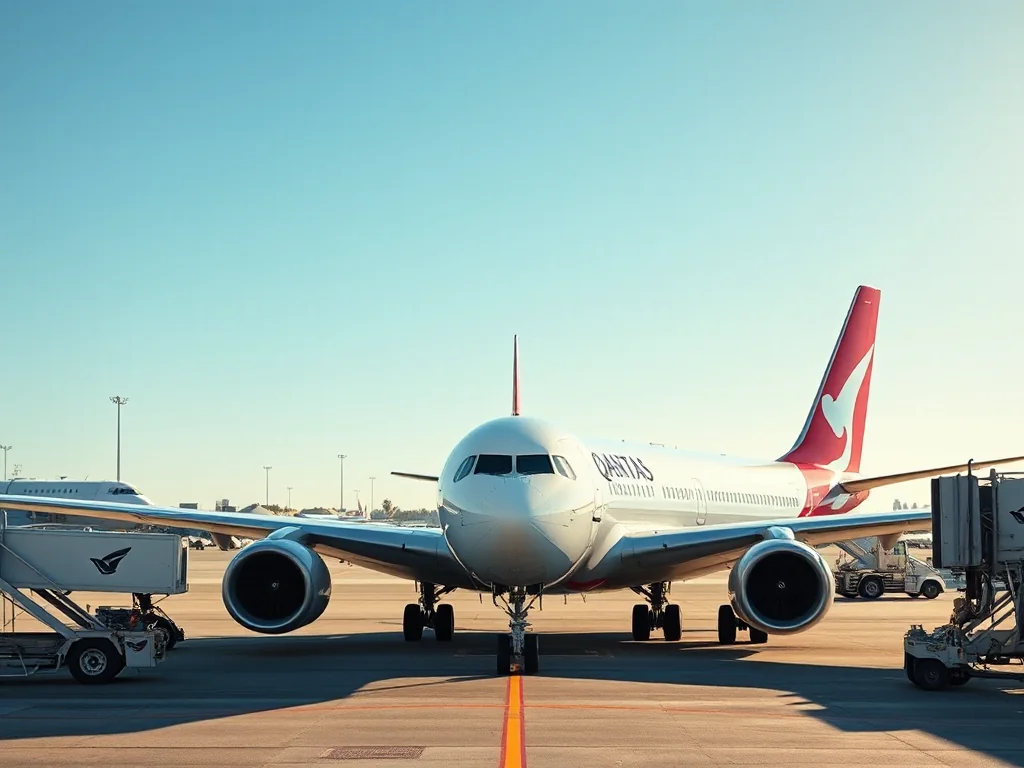
Qantas Project Sunrise: Testing the Future of Direct Flights
Qantas Project Sunrise aims to connect Sydney and Melbourne to the world’s furthest cities with direct flights, recently achieving a major milestone with a 17,000km test flight. At BanksiaPulse, we track these developments for Australians interested in the future of travel. As of July 24, 2026, the arrival of the Airbus A350-1000ULR in Melbourne after a 19-hour journey marks a significant step forward, highlighting the 18,500km range capacity of this new aircraft technology.
- What is Qantas Project Sunrise and why is it significant for aviation?
- How does the 17,000km direct flight test work and what makes it possible?
- What aircraft and technology is Qantas using for Project Sunrise flights?
- When will Qantas Project Sunrise flights become available to the public?
- What are the challenges and risks of ultra-long-haul flights like Project Sunrise?
- How does Qantas Project Sunrise compare to competitor ultra-long-haul flight programs?
- Frequently Asked Questions
What is Qantas Project Sunrise and why is it significant for aviation?
Qantas Project Sunrise is a strategic initiative designed to establish direct commercial links between Australia’s eastern seaboard and global hubs that were previously only reachable via stopovers. The project represents a significant shift in long-haul aviation, aiming to reduce total travel time for passengers while increasing operational efficiency for the carrier. By eliminating the need for transit, Qantas seeks to capture a premium market segment of business and leisure travelers who prioritise time-saving non-stop connectivity. This initiative is particularly significant for Australia, an island nation historically challenged by its geographic isolation from major economic centers in Europe and North America. The significance of this project extends beyond mere convenience for frequent flyers. It involves complex logistical planning, including medical research on passenger well-being during ultra-long periods in the air and specific aircraft modifications to handle the extended duration. According to data provided by the Australian Bureau of Statistics regarding international travel trends, the demand for more streamlined transit options continues to grow. By pushing the boundaries of current flight capabilities, the airline intends to redefine the standard for international travel, effectively bringing distant global markets closer to Australian residents.
For the average Australian traveller, the successful implementation of this project could mean avoiding the fatigue associated with airport transfers and layovers in crowded hubs. Successfully completing a 19-hour non-stop flight, as demonstrated in the recent Toulouse to Melbourne test, proves that these ambitious routes are technically viable. The focus remains on comfort and safety throughout these extended flight segments, ensuring that passengers arrive at their destinations ready for business or tourism. This shift is set to influence how global airlines perceive long-range flight feasibility in the coming years, potentially setting a new international aviation benchmark.
How does the 17,000km direct flight test work and what makes it possible?
The 17,000km direct flight test is made possible by the technical capabilities of the Airbus A350-1000ULR (Ultra Long Range), an aircraft specifically designed to sustain flights for up to 20 hours. This aircraft features extended fuel capacity and optimised aerodynamics to ensure efficiency over extreme distances. The recent test flight from Toulouse to Melbourne served as a critical trial for this specialized model, allowing engineers to monitor aircraft performance, fuel consumption, and crew endurance under real-world conditions. By executing a non-stop journey covering such a vast expanse, Qantas verified that the structural and mechanical integrity of the airframe meets the stringent requirements for ultra-long-haul commercial service. During the flight, tracking platforms like Flightradar24 recorded the aircraft’s progress, making it the most watched plane on the internet during its transit. This level of interest underscores the public anticipation surrounding the successful delivery and operation of the aircraft. The mechanics of such a flight involve rigorous fuel management strategies and weight reduction techniques, ensuring that the aircraft can maintain speed and altitude while carrying enough payload to be economically viable. Because the flight must account for variable weather patterns and wind conditions, the aircraft’s sophisticated navigation systems play a crucial role in maintaining its intended trajectory across the globe.
For passengers, the implementation of these long-range test findings translates into a travel experience that significantly reduces the risk of missed connections and luggage handling issues common in multi-leg journeys. Practical benefits include arrival at the destination without the stress of navigating foreign transit terminals or enduring long waits in airport lounges. As the airline refines these routes, travellers can expect more reliable scheduling and a more streamlined path to their final destination. This technical progress represents a major investment in the future of the Australian aviation industry, ensuring long-term connectivity with key global partners.
What aircraft and technology is Qantas using for Project Sunrise flights?
Qantas is utilising the Airbus A350-1000ULR, a new variant of the A350 family explicitly configured for ultra-long-distance travel. This aircraft model boasts a maximum range of 10,000 nautical miles, or 18,500km, providing the necessary distance buffer for long-haul operations. The plane is equipped with advanced avionics and engine technology that improves fuel efficiency while decreasing noise and carbon emissions, addressing modern environmental standards. By selecting this specific platform, the airline benefits from the latest advancements in aerospace engineering, which are vital for maintaining safe and reliable transit over such extended durations without intermediate landings. Beyond the engine and airframe, the interior configuration is a central component of the technology package. The aircraft is designed to accommodate specific seating layouts that prioritise passenger comfort, including enhanced amenities that help mitigate the physical strain of sitting for nearly a full day. The onboard systems for environmental control, such as cabin pressure and air quality management, are tuned to ensure a more comfortable environment compared to older aircraft models. This emphasis on passenger well-being is a core pillar of the project, as the airline aims to make the long duration feel shorter and more manageable through technological innovation.
The practical application for travellers is a significantly more comfortable journey. Instead of managing layovers, passengers can remain in a consistent, controlled environment from takeoff to touchdown. This technological approach allows for a more efficient use of time, which is particularly advantageous for business travellers who need to remain productive. As these aircraft enter the fleet, the reliance on advanced, automated diagnostics will ensure that maintenance schedules are kept tight, further enhancing the reliability of the service. These investments ensure that Australian travelers are accessing some of the most advanced commercial aviation technology currently available globally.
When will Qantas Project Sunrise flights become available to the public?
Qantas has initiated testing, with the recent Toulouse-Melbourne flight serving as the first time this specific model has taken to the skies, indicating that the launch date is approaching as the fleet matures. While specific commercial schedules are subject to final regulatory approvals and comprehensive safety trials, the successful completion of these initial test flights is a primary prerequisite for entering public service. Each flight segment is measured against safety metrics, with the data gathered during these 19-hour trips directly influencing the final training and certification phases required before the airline can open bookings for standard commercial routes. Public availability will be announced in stages, with the airline likely prioritising key high-demand international markets for the initial launch phase. Passengers interested in booking these flights should monitor official airline announcements as the fleet becomes fully operational. According to Reserve Bank of Australia economic reports, infrastructure projects of this scale often undergo meticulous planning phases before reaching full capacity. The timeline is designed to ensure that when the service eventually opens, the aircraft, crew, and support systems operate with maximum efficiency and safety. Customers should expect a phased roll-out that allows for service adjustment based on real-world operational feedback.
For the traveler, this means that while these routes are not yet open for general booking, they are moving rapidly from the design and testing stage into reality. Staying informed through legitimate airline channels is the best way to secure early access once seats are made available to the public. As the project nears its final deployment, the airline will likely offer various fare classes designed to cater to a range of travel needs. Being ready to book once these routes go live will be essential for those looking to experience the convenience of the world’s longest direct flights shortly after their official commercial debut.
What are the challenges and risks of ultra-long-haul flights like Project Sunrise?
Ultra-long-haul flights present unique challenges, primarily regarding crew fatigue, passenger health, and operational reserves for emergencies. Managing these risks involves sophisticated crew scheduling, where multiple flight teams rotate to maintain alertness levels, and extensive planning for alternative landing sites in remote areas. The human element is a major focus; research into circadian rhythms and the impact of prolonged cabin time is used to develop service protocols that minimise discomfort and promote better sleep. Balancing these human factors with the mechanical demands of a 19-hour flight requires a level of coordination rarely seen in shorter distance aviation. Operational risks also include unpredictable weather events and the need for significant fuel reserves, which must be accounted for in the flight planning software. If an unexpected change in conditions occurs, the airline must have established protocols to divert or manage the fuel consumption safely. These risks are mitigated through the use of redundant navigation and communication systems that allow the crew to maintain contact and control regardless of their location on the globe. Each test flight, such as the one from France to Melbourne, provides invaluable data that helps the engineering team refine these safety procedures and emergency contingency plans for future commercial service.
For the passenger, the primary takeaway is that the safety protocols for these ultra-long flights are more robust than those for traditional shorter-haul journeys. The airline has invested heavily in ensuring that the aircraft is prepared for any eventuality, prioritising passenger wellbeing at every step. While the duration of these flights is unprecedented, the methodical testing phase ensures that any potential risks are identified and managed well before the first ticketed passenger boards. This approach provides a high level of security and peace of mind, knowing that the most stringent safety standards are being applied to the new long-range flight model.
How does Qantas Project Sunrise compare to competitor ultra-long-haul flight programs?
Qantas Project Sunrise distinguishes itself from competitor programs by focusing on the unique geography of Australia, creating direct links that have historically been considered too long to operate profitably or safely. While other global carriers operate flights of significant duration, the focus here is on the specific configuration of the A350-1000ULR and the tailor-made cabin environment designed for these extreme segments. Competitors often rely on existing wide-body aircraft adapted for long range, whereas this project uses a platform built from the ground up for the specific purpose of connecting Australia directly to its most distant global trade partners. The strategic differentiation lies in the airline’s commitment to the total passenger experience, including dedicated zones for exercise and hydration that are not standard on all long-haul aircraft. By integrating medical and physiological research into the aircraft design, the project seeks to set a standard that competitors will struggle to match in terms of passenger comfort. Furthermore, the focus on non-stop connectivity provides a competitive advantage for business travellers who require the most time-efficient routing possible between Australia and Europe or the Americas. This creates a niche market position that is distinct from standard international long-haul offerings provided by other major global airlines.
Practically, this means Australian travellers can expect a more specialised service tailored to the specific challenges of ultra-long transit. As competition in the ultra-long-range sector grows, the advantage of having purpose-built technology will likely become more pronounced. Passengers should observe how these services compare in terms of cabin amenities, seat comfort, and overall reliability once they become operational. The unique focus on Australian travel needs makes this initiative a standout in the global aviation market, providing a distinct alternative to traditional hub-and-spoke models that require multiple connections and prolonged total travel time.