
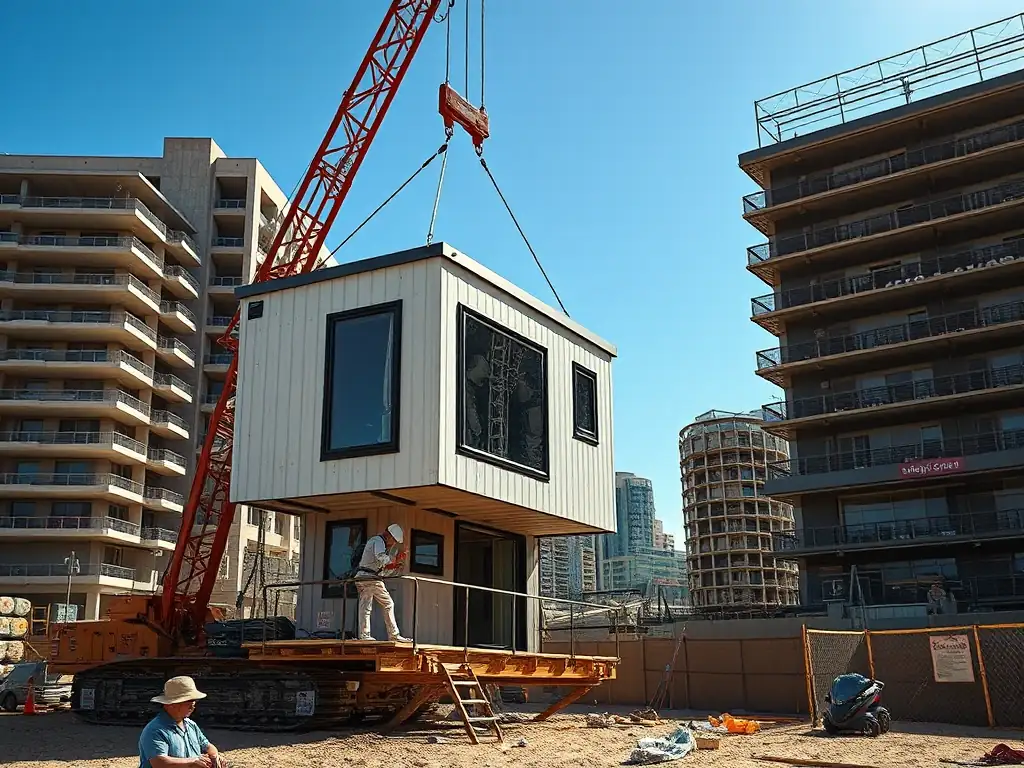
Property development trends: Are factory-built homes the future?
Property development in Australia is evolving, with factory-built homes emerging as a rapid solution to housing supply shortages. These dwellings can be completed in mere days for as little as $100,000, as reported by industry sources on July 25, 2026. At BanksiaPulse, we examine how this construction method could reshape our urban landscapes. While the potential for speed and affordability is clear, current finance and regulation hurdles continue to restrict this sector’s expansion, leaving many Australians wondering if these modular builds will truly enter the mainstream.
- What are factory-built homes and how do they differ from traditional construction?
- What are the cost savings of choosing factory-built homes over conventional builds?
- How do financing and eligibility requirements differ for factory-built property purchases?
- What are the potential risks and durability concerns with factory-built homes?
- What government policies and incentives support factory-built housing in Australia?
- How will industrial resurgence impact Australian property prices in the coming years?
- Frequently Asked Questions
What are factory-built homes and how do they differ from traditional construction?
Factory-built homes, or modular housing, are constructed in a controlled indoor environment rather than on-site, differing fundamentally from the traditional stick-built process. By moving the majority of the assembly line to a warehouse, builders minimize weather delays and site-specific logistical complexities that often plague conventional residential projects across Australia. This manufacturing approach ensures greater precision and consistency, with many components fabricated to exact specifications before being transported to the final location for assembly. According to official data from the Australian Bureau of Statistics (ABS) regarding construction efficiency, indoor prefabrication significantly reduces the reliance on on-site labour during the early stages of building. This structural difference provides homeowners with predictable timelines, potentially cutting total construction duration from many months to just a few short weeks, provided site preparation is completed in advance.
The distinction between modular construction and traditional methods extends to how materials are managed throughout the project lifecycle. In a factory setting, waste reduction is often optimized, as excess building materials can be recycled or reused for future units immediately. This stands in stark contrast to traditional sites, where off-cuts and packaging often result in significant landfill contributions. For prospective buyers, understanding these differences is essential when weighing the long-term value of a property. While the speed of construction is an undeniable advantage, the logistical requirements of transporting large, finished modules to a site require specialized planning. This process ensures that the building envelope remains secure during transit, maintaining the integrity of the home’s finish from the factory floor to the final foundation installation.
![[Prefabricated home being transported by truck to an Australian site]](https://images.pexels.com/photos/17958129/pexels-photo-17958129.jpeg?auto=compress&cs=tinysrgb&h=650&w=940)
For many Australians, the transition to modular living represents a shift in perception regarding quality and design flexibility. Unlike earlier iterations of transportable housing, modern factory-built homes offer diverse architectural styles, including high-end finishes that rival luxury conventional builds. Investors and owner-occupiers alike are beginning to appreciate that being built off-site does not equate to inferior quality. Instead, it offers a sophisticated approach to managing the rising costs of land and labor in major metropolitan hubs like Sydney and Melbourne. By utilizing industrial-grade technology, developers can produce structures that meet or exceed the National Construction Code, ensuring safety and durability. Ultimately, the shift toward these homes marks a departure from traditional reliance on local craft-based construction, favoring a more streamlined, industrialised model that prioritises efficiency without compromising the structural standards required for Australian residential property.
What are the cost savings of choosing factory-built homes over conventional builds?
Factory-built homes offer significant cost efficiencies, with entry-level units starting as low as $100,000, though final project budgets must account for land acquisition and site preparation. These savings are primarily driven by the economies of scale achieved in a factory environment, where bulk purchasing of materials and streamlined labour processes keep overheads lower than bespoke on-site construction. By eliminating the high costs associated with extended weather-related delays, developers can provide more accurate pricing models for consumers. When you consider that a significant portion of traditional property costs is attributed to prolonged site supervision and contractor fees, the modular model presents a compelling financial argument for cost-conscious buyers looking to enter the market without the burden of traditional construction interest spikes (Source: RBA, 2026).
A practical example illustrates this: if a family chooses a pre-fabricated design for a vacant block in regional New South Wales, they avoid the variable costs of tradespeople waiting on site due to rain or scheduling overlaps. By standardizing the build, the cost per square metre is often lower than high-end custom homes, making home ownership more accessible. However, buyers must remember that while the structure is cheaper, the total financial commitment includes site excavation, council permits, and utility connections. These “hidden” costs must be thoroughly reviewed during the planning phase to ensure they don’t exceed the savings gained from the factory construction. Planning authorities have increasingly recognised these costs, yet navigating the development application process remains a critical step in finalizing the budget before any factory fabrication begins.
Investing in factory-built property also allows for more predictable cash flow management, which is a major advantage for developers and individuals alike. Because the manufacturing phase happens concurrently with the necessary site works, the time to completion is drastically shortened, reducing the period for which investors must pay holding costs or construction loans. According to the ATO’s official guide on tax offsets, understanding the depreciation of capital works is vital for those using these homes as investment properties. By locking in a price early in the production cycle, buyers protect themselves against the volatility of material price fluctuations that frequently affect traditional building contracts. This financial stability, combined with reduced labor hours, makes factory-built housing a central topic for those looking to expand their portfolio while maintaining strict control over their expenditure.
How do financing and eligibility requirements differ for factory-built property purchases?
Financing factory-built homes requires navigating specific lending criteria, as many traditional mortgage products are designed for conventional, progressive-payment construction schedules. Because a large portion of the work is completed off-site before the home reaches the block, lenders often face challenges in valuing the asset at different milestones compared to a standard house-and-land package. Many financial institutions prefer to work with builders who provide clear certification of the construction process. Consequently, borrowers may find that fewer lenders currently cater to modular builds, necessitating a thorough search for financial providers familiar with this sector. It is essential to communicate clearly with your mortgage broker about the specific nature of the build to ensure that the finance product aligns with the factory’s payment schedule and the land transfer requirements. The eligibility process also demands rigorous attention to council regulations and local zoning laws, which may not always differentiate between factory-built and traditional dwellings. In some regions, planning departments might have specific requirements for transportable homes, impacting your ability to secure the necessary development approvals. Before applying for a construction loan, you must verify that the chosen property location is zoned for your specific type of dwelling. This regulatory alignment is a prerequisite for most major lenders. Without valid development consent, securing financing becomes significantly harder, as the risk profile of the project increases in the eyes of the bank. Therefore, early engagement with your local council’s planning office is as important as speaking with your financial lender during the initial project stages.
Furthermore, government-backed housing initiatives may or may not apply depending on the classification of the modular home. Some grants intended for first-time buyers have strict criteria regarding the nature of the building, and it is crucial to confirm your eligibility for these programs before committing to a factory-built purchase. You should consult the latest guidelines as of July 25, 2026, on the official government portals to ensure you are not missing out on potential financial support. By providing the bank with detailed contracts and evidence of the manufacturer’s credentials, you can better position your application. Maintaining transparent communication with both your lender and the construction company will help you avoid the common pitfalls that currently hold back many prospective buyers within the Australian factory-built housing sector.
What are the potential risks and durability concerns with factory-built homes?
While factory-built homes are engineered for structural integrity, potential buyers often express concerns regarding their long-term durability and the risks associated with transporting completed modules. Modern modular homes are specifically designed to withstand the stresses of being moved, often featuring reinforced steel frames that provide stability far exceeding standard requirements for stationary builds. These structures undergo rigorous quality assurance testing within the factory to ensure they meet the same stringent standards as traditional homes. However, the integrity of the home depends heavily on the quality of the foundation and the precision of the final on-site installation. Ensuring that the site is properly levelled and prepared is the most effective way to mitigate risks to the structure’s long-term alignment and overall performance after installation. Durability concerns are frequently tied to historical perceptions of portable dwellings, but today’s technology has largely addressed these issues through high-quality material selection and advanced weatherproofing. When considering the longevity of the property, homeowners should evaluate the materials used in the cladding, insulation, and roof systems. For example, homes built in coastal or high-wind zones require specific materials designed to resist corrosion and structural vibration during transit. A professional pre-purchase inspection of the modular units prior to their delivery can provide peace of mind. While the risk of damage during transportation exists, modern logistical companies utilize specialized lifting equipment and air-ride trailers that significantly reduce these risks, ensuring the home arrives in perfect condition for placement on its foundations.
Ultimately, the risks involved are largely manageable through due diligence and by selecting an experienced manufacturer with a proven track record of successful installations. As with any major investment, it is vital to research the company’s warranty policies and the specific technical specifications of their build process. Prospective owners should ask for documented evidence of compliance with Australian Standards for residential buildings, ensuring that the home is built to withstand local climate conditions. By conducting thorough research and potentially hiring an independent building consultant to oversee the factory stage, you can effectively minimize concerns. Understanding that these homes are subject to the same regulatory scrutiny as traditional constructions should provide confidence, provided you choose a reputable manufacturer capable of delivering high-quality, durable housing solutions that stand the test of time.
What government policies and incentives support factory-built housing in Australia?
Government policy surrounding factory-built housing is gradually shifting as authorities look for ways to address the current housing supply crisis across major cities. While there is no single national policy, various state-level initiatives and planning reforms are being introduced to streamline the approval process for modular constructions. These changes aim to reduce the regulatory barriers that currently hinder the sector, acknowledging that fast-tracked construction can play a vital role in providing affordable housing for citizens. For instance, some state governments have simplified development applications for prefabricated dwellings that meet pre-approved architectural standards, allowing for a quicker transition from design to occupancy. Staying updated on your state’s specific housing strategy is essential for anyone interested in navigating the current landscape of property development incentives. Investors and developers are also looking toward infrastructure grants that may support the development of industrial sites for modular housing production. By focusing on industrial resurgence, some local governments are providing tax incentives or zoning flexibility to companies that establish manufacturing hubs for prefabricated homes. This not only supports local employment but also increases the availability of housing stock in a condensed timeframe. For the average buyer, these policies often translate into more competitive pricing and a greater selection of available floor plans. It is worth noting that eligibility for these incentives often depends on the specific project location and the manufacturer’s commitment to sustainable building practices, which are becoming increasingly central to government procurement policies in the current fiscal year of 2026.
In addition to local planning support, there is a growing trend of government bodies exploring how modular homes can be used for public and social housing projects. By utilizing factory-built units, the government can deliver much-needed residential capacity with less disruption to existing neighbourhoods and lower overall expenditure. If you are considering a property purchase involving a modular home, it is beneficial to check if your project aligns with regional development grants that may be available in your council area. Regularly checking official government websites ensures you remain informed about changes to building codes and subsidies that could impact the financial viability of your investment. Leveraging these government-supported pathways is one of the most effective strategies for overcoming the regulatory hurdles that currently characterize the Australian factory-built housing industry today.
How will industrial resurgence impact Australian property prices in the coming years?
The industrial resurgence of factory-built homes is expected to exert downward pressure on the costs of residential property by increasing the supply of dwellings in a significantly shorter period. As manufacturing capabilities expand across Australia, the ability to rapidly deploy high-quality, affordable housing units could stabilize price growth, especially in high-demand areas where land value continues to climb. By streamlining the construction process, we may see a move toward a more efficient market where property prices reflect the actual cost of materials and labor more accurately than the currently volatile cycle of traditional builds. This shift suggests that regional hubs, once considered too remote for major construction projects, may see an uptick in development activity as modular options become easier to transport and assemble. Looking at the economic landscape of 2026, the scaling of this sector could change how we view property investment. If the manufacturing sector continues to grow, it will likely foster competition among developers, leading to more innovative designs and cost-effective solutions for the average buyer. For instance, an investor focusing on suburban infill sites could benefit from the speed of modular delivery, allowing for faster returns compared to traditional multi-year developments. This potential for industrial growth doesn’t just benefit the homeowner; it helps the broader economy by supporting local manufacturing jobs and technical training. As this industry matures, the traditional reliance on slower, more expensive building techniques will likely be challenged, providing a more balanced supply-demand ratio in the Australian property market over the next decade.
Despite these benefits, the impact on property prices will largely depend on the integration of factory-built homes into current infrastructure planning. If local councils embrace this shift by adjusting planning laws and zoning regulations, the accessibility of home ownership will likely improve, particularly for younger generations and first-time buyers. However, it remains a balanced equation: while supply will increase, the long-term desirability and maintenance of these homes will dictate their resale value. For those watching the market, keeping an eye on the growth of the factory-built sector is essential, as it could signal a broader change in how we define property value in an increasingly industrialized residential landscape. By focusing on efficient construction and smart policy, Australia is well-positioned to see a positive evolution in the property market’s resilience and diversity.