
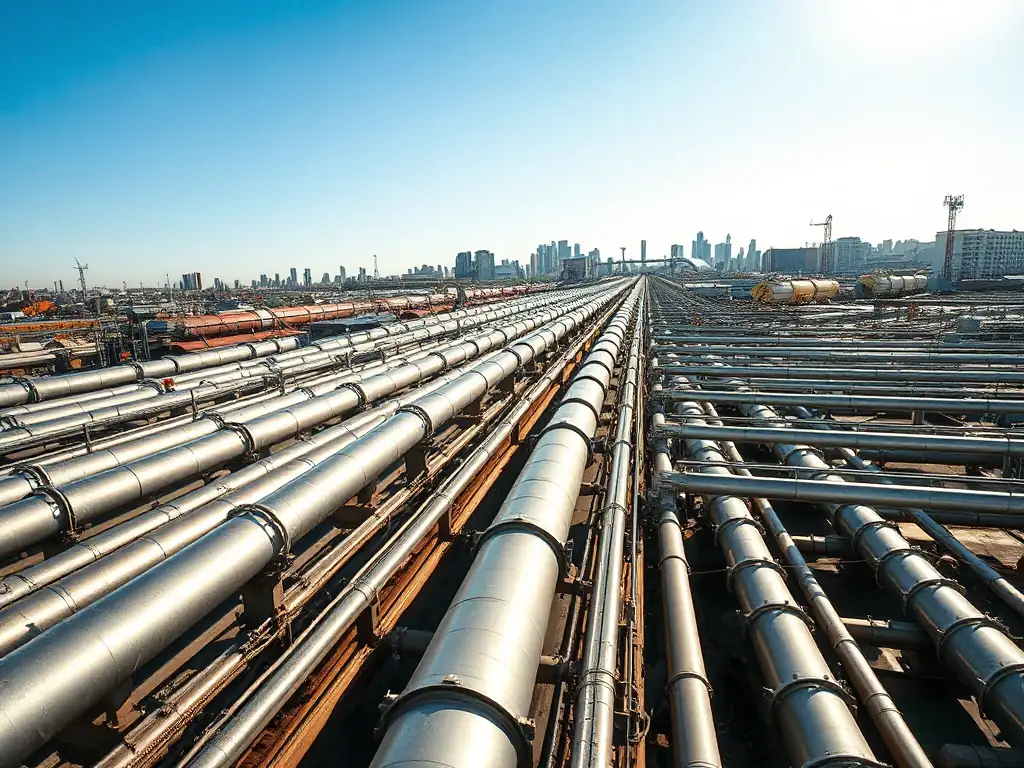
Infrastructure investment: Australian Gas Pipelines Sold for $1 Billion
Infrastructure investment serves as the backbone of the Australian economy, providing the physical assets necessary for utility delivery. BanksiaPulse reports that Morgan Stanley’s infrastructure investment arm recently secured a $1 billion deal to acquire Epic Energy from QIC. This acquisition, involving significant gas pipeline assets in South Australia and a 154-megawatt green power portfolio, reflects a major shift in capital allocation. For local investors, understanding these utility-scale acquisitions is essential for gauging the long-term stability of the national energy grid.
What are Australian gas pipelines and why are they considered critical infrastructure investments?
Australian gas pipelines are essential conduits that transport natural gas from extraction sites to industrial hubs, power stations, and residential networks, forming the backbone of the nation’s energy supply chain. These assets are categorized as critical infrastructure because their uninterrupted operation is vital for maintaining economic activity and public safety across the country. According to official reports from the Australian Bureau of Statistics (ABS), energy stability remains a primary indicator of national economic health. These pipelines often function as natural monopolies due to the immense cost of construction, which effectively limits competition and creates a steady, long-term revenue stream for asset owners. This predictable nature makes them highly desirable for institutional investors looking to hedge against volatile equity markets, as they essentially act as toll roads for essential energy commodities.
The strategic importance of these pipelines extends beyond mere transportation; they are integral to the reliability of state-based power grids in regions like South Australia. Because these pipelines facilitate the movement of gas required to balance intermittent renewable energy generation, they are often paired with investments in green power portfolios. By owning the infrastructure that supports both traditional and emerging energy sources, investment firms like Morgan Stanley can ensure their portfolios remain relevant throughout the energy transition. For the average Australian, these assets are the invisible foundation supporting home heating, electricity generation, and industrial manufacturing processes. Ensuring these systems are maintained and upgraded is a national priority that requires significant capital expenditure, typically provided by large-scale superannuation funds and international investment conglomerates.
Investing in these pipelines requires a deep understanding of the regulatory landscape and the physical constraints of the assets themselves. As the demand for energy shifts, pipeline operators must navigate the integration of hydrogen or other low-carbon gases to maintain asset longevity. This dual-purpose role—delivering gas while supporting green portfolios—is a hallmark of modern infrastructure investment in Australia. By focusing on long-life assets, investors aim to mitigate the risks associated with market fluctuations, providing a stable return that aligns with the long-term horizons of superannuation funds. The recent $1 billion acquisition is a testament to the enduring value placed on such strategic assets within the Australian market, highlighting a trend of institutional consolidation.
![[An aerial view of industrial gas pipeline infrastructure in a rural landscape]](https://images.pexels.com/photos/6754756/pexels-photo-6754756.jpeg?auto=compress&cs=tinysrgb&h=650&w=940)
How does the $1 billion Morgan Stanley acquisition impact the Australian energy sector?
The acquisition of Epic Energy by Morgan Stanley for $1 billion represents a significant consolidation of energy infrastructure ownership within the Australian market. By transferring these critical assets from QIC—which manages investments for the Australian Retirement Trust—to a global financial giant, the deal highlights the growing influence of international capital in domestic energy utility management. This move ensures that a large-scale manager with significant global resources will now oversee critical gas pipelines in South Australia, potentially leading to increased investment in pipeline maintenance and operational efficiency. Furthermore, the inclusion of a 154-megawatt green power portfolio within the transaction demonstrates that major investors are increasingly viewing traditional gas infrastructure as compatible with renewable energy strategies. This alignment is crucial for the ongoing energy transition in Australia, where balancing supply security with decarbonization goals is a complex challenge for both regulators and utility providers.
For local businesses and households in South Australia, the long-term impact of this ownership change will depend on how the new operator manages the tariff structure and investment in network upgrades. Since these pipelines are regulated to ensure fair access, international owners must adhere to strict operational standards set by government bodies. The injection of $1 billion in capital commitment signifies a strong vote of confidence in the long-term viability of the South Australian energy grid. As investment firms prioritize assets that can demonstrate both economic stability and adherence to modern environmental standards, we can expect to see more of these multi-faceted deals. This trend is likely to influence how other energy assets are valued and managed, setting a new benchmark for infrastructure investment that integrates conventional gas transport with renewable energy capacity.
This acquisition also provides a clear signal to other institutional investors about the perceived value of Australian utility infrastructure in the current economic climate. With national growth targets adjusted—notably, the 2026 growth target sits between 4.5 and 5 per cent, according to recent international economic reporting—the stability offered by essential infrastructure becomes increasingly attractive compared to riskier asset classes. By securing such a significant footprint in the energy sector, Morgan Stanley positions itself to benefit from the ongoing demand for energy transportation while simultaneously participating in the shift toward a greener power mix. This dual exposure is becoming a standard feature of sophisticated infrastructure portfolios, as investors look for ways to capture value from both the legacy energy system and the emerging renewable energy economy.
What makes pipeline infrastructure attractive to major investment firms like Morgan Stanley?
Pipeline infrastructure is highly attractive to major investment firms because it provides stable, inflation-linked cash flows that are relatively immune to the cyclical nature of general economic activity. Unlike consumer-facing businesses that rely on discretionary spending, gas pipeline operators provide a critical service that remains essential regardless of whether the economy is expanding or contracting. This utility-like reliability is a primary draw for firms managing significant capital, such as Morgan Stanley, which seek low-volatility assets that can deliver consistent dividends over several decades. According to data from the Reserve Bank of Australia (RBA), maintaining long-term financial stability is a key outcome of such infrastructure investments. Furthermore, the high barriers to entry, including stringent environmental regulations and massive capital requirements, protect existing pipeline owners from new competitors, effectively cementing their market position.
Beyond the immediate cash flow, these assets offer a unique opportunity for infrastructure investment firms to influence the pace and direction of the regional energy transition. By acquiring established pipeline networks, firms can leverage their influence to repurpose infrastructure for future energy needs, such as the transport of hydrogen or the integration of carbon-neutral gases. This potential for asset evolution ensures that the capital invested today continues to generate value as the regulatory and technological environment shifts. Additionally, the ability to bundle these pipelines with renewable energy portfolios, as seen in the Epic Energy transaction, allows firms to create balanced, future-proofed portfolios. This capability to hedge across different energy types makes these investments more resilient to policy changes, providing a layer of security that pure-play gas or pure-play renewable investments might lack.
For institutional investors, the prestige and stability of Australian infrastructure remain high, even as global markets experience fluctuations. The ability to own a critical piece of the South Australian economy is a strategic advantage, providing a foothold in a growing market that requires ongoing infrastructure development. As firms compete for these limited, high-quality assets, the premiums paid often reflect not just the current cash flow, but the long-term growth potential inherent in the energy transition. For the investor, this results in a high-quality asset that serves as a hedge against inflation and a cornerstone of a diversified investment strategy, ultimately serving the needs of the underlying superannuation funds and their members who rely on consistent long-term growth.
How do gas pipeline investments compare to other types of infrastructure investments?
Gas pipeline investments are distinct from other infrastructure assets like airports, toll roads, or telecommunications networks due to their specific regulatory environments and their direct link to the energy commodity cycle. While a toll road relies on traffic volume to generate revenue, a gas pipeline often operates under take-or-pay contracts that guarantee income regardless of short-term demand fluctuations, providing a unique form of revenue security. However, this sector is more sensitive to decarbonization policies than passive infrastructure like toll roads, as the future of gas is tied to global environmental targets. Compared to investments in renewable energy farms, which are often at the mercy of weather conditions and wholesale electricity prices, pipelines act as the central nervous system that allows energy to reach its destination, giving them a more foundational role in the supply chain. This foundational role often results in a different risk-return profile that is particularly appealing for portfolios requiring reliable, long-term capital preservation.
When evaluating these options, investors often weigh the immediate returns against the long-term regulatory risks associated with carbon-heavy assets. Airports and telecommunications infrastructure, for example, have high growth potential tied to population density and digital adoption, whereas gas pipelines are often seen as mature assets with steady, predictable performance. The recent purchase of Epic Energy shows that the industry is moving toward a hybrid model, where the stability of pipeline revenue is used to fund or anchor renewable projects. This approach minimizes the downside risk of being overly reliant on a single energy source while maximizing the long-term utility of the investment. For an Australian investor, this means that while gas pipelines may not offer the explosive growth of high-tech infrastructure, they provide a reliable, defensive anchor that can help manage volatility within a larger, broader portfolio of assets.
Understanding the differences between these infrastructure classes is crucial for those building a retirement strategy or managing large-scale assets. A diversified approach—one that includes both the steady, regulated income of pipelines and the growth potential of new telecommunications or transport projects—is generally considered the best practice for institutional managers. For the individual investor, realizing that these multi-billion dollar deals are based on the need for stability and reliability can shift one’s own investment focus toward similar high-quality, essential-service assets. Whether through direct shares or managed funds, aligning with infrastructure that supports the physical needs of the country is a proven strategy for achieving long-term financial goals, as these assets are inherently tied to the future of the nation itself.
What are the financial returns and risks associated with Australian gas pipeline investments?
The financial returns of Australian gas pipeline investments are typically characterized by long-term, inflation-indexed yields, which are highly attractive to institutional investors operating in the current economic environment. By securing contracts that allow for tariff adjustments based on CPI (Consumer Price Index) or specific regulatory formulas, operators can effectively manage the risk of inflation, ensuring that the real value of their returns remains protected over time. However, these returns are not without risk. The primary financial risk associated with gas pipelines is the potential for early obsolescence or reduced throughput as the economy transitions away from traditional gas-fired energy. If regulatory bodies decide to implement stricter emissions controls that significantly reduce gas demand, the underlying value of the pipeline infrastructure could face downward pressure, requiring costly modifications to remain economically viable for different energy types.
Another significant risk factor is the regulatory scrutiny applied by bodies such as the ACCC (Australian Competition and Consumer Commission), which monitors pricing to prevent the abuse of market power. Changes in regulatory policy, such as the capping of access prices or the mandatory sharing of pipeline capacity, can directly impact the profitability of these assets. Furthermore, the operational risks involved in maintaining aging pipelines require consistent and significant capital investment. If an operator fails to manage these maintenance costs effectively, it can lead to safety concerns or regulatory penalties, which would quickly erode the projected financial returns. Despite these challenges, the sector remains a staple of institutional portfolios because the barriers to entry are so high; few new players have the capacity to build competing pipelines, which protects the market share of established owners even when regulatory or market conditions become more difficult.
For a potential investor, the key is to assess the long-term demand for the gas being transported through a particular pipeline network. Networks that serve industrial customers or essential power stations in stable regions tend to offer more security than those serving volatile or declining markets. Assessing the strength of the contracts and the history of regulatory compliance for a specific operator is vital. When considering the risk-reward ratio, many institutional firms are willing to accept the regulatory and transition risks in exchange for the predictable, annuity-like income that these assets provide. It is this balance of risk management and reliable income that keeps the Australian gas pipeline sector a vibrant field for major investment firms, ensuring that these vital pieces of infrastructure continue to receive the funding necessary to operate safely and efficiently for the long term.
What regulatory requirements apply to infrastructure investments in Australian gas pipelines?
Infrastructure investments in Australian gas pipelines are governed by a robust framework designed to ensure fair access, competitive pricing, and the safety of critical utility assets. Owners must navigate the National Gas Law and the National Gas Rules, which are enforced by regulators to prevent the monopolistic abuse of market power. Because pipelines are essential to the nation’s energy supply, the government exercises oversight to ensure that tariffs charged to retailers and industrial users remain reasonable. Any acquisition, such as the $1 billion Morgan Stanley deal, is also subject to approval by the Foreign Investment Review Board (FIRB) if international ownership is involved, ensuring that the transfer of such sensitive infrastructure is in the national interest. These regulatory requirements provide a sense of security for the public, knowing that essential energy services are not being exploited for excessive profit at the expense of end consumers.
Compliance extends beyond mere pricing; operators are also responsible for rigorous maintenance schedules and the management of environmental impacts associated with pipeline operations. If a pipeline crosses state borders or is part of a larger national network, the regulatory burden increases significantly, requiring coordination between state and federal authorities. This regulatory environment is not just a hurdle but also a form of protection for investors, as it creates a stable, predictable rulebook that governs the behavior of all participants. When an investment firm enters the market, they are buying into a well-established system that, while complex, provides a clear pathway for legitimate commercial operations. The ongoing interaction with regulators is a standard part of the business, and companies that demonstrate strong compliance often find it easier to navigate future expansions or contract negotiations.
For Australians, this regulatory oversight is what keeps the lights on and the heaters running. It ensures that even when ownership changes—such as the transition of Epic Energy from QIC to Morgan Stanley—the fundamental service obligations remain unchanged. The government’s role is to act as a steward of the national energy grid, balancing the needs of investors for reasonable returns with the public’s need for affordable, reliable energy. For anyone interested in infrastructure as an investment class, understanding these regulations is essential. They define the boundaries of the market and dictate how value is created and captured. By adhering to these stringent standards, investment firms not only comply with the law but also build the trust necessary to continue their long-term presence in the Australian energy infrastructure sector.