
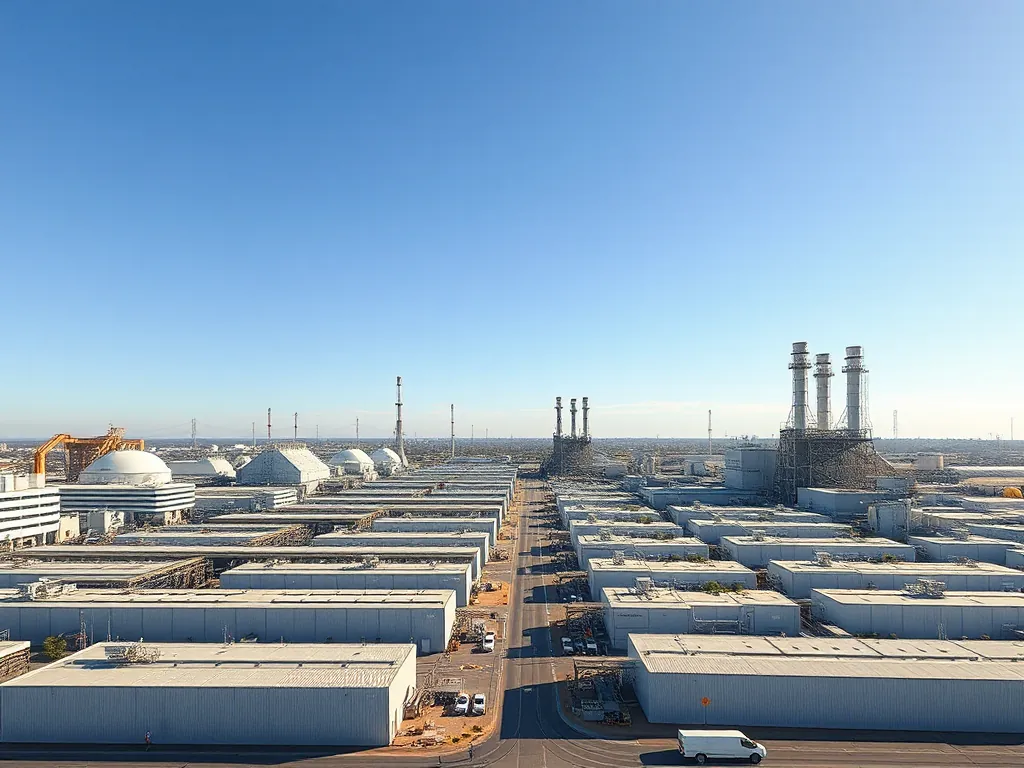
Aluminium smelter bailout: Australia’s Industrial Strategy 2026
An aluminium smelter bailout represents a strategic government intervention designed to sustain domestic manufacturing capacity when energy prices threaten local industrial viability. At BanksiaPulse, we monitor these significant industrial shifts as they impact the broader Australian economy. Recent developments involving the Tomago facility, which accounts for a substantial portion of national aluminium production, highlight how federal and state governments act to prevent the closure of critical infrastructure. As of August 13, 2026, officials are preparing a significant financial support package.
What is an aluminium smelter bailout and why do governments provide them?
An aluminium smelter bailout is a targeted fiscal response where governments provide direct financial assistance or subsidised energy contracts to prevent an industrial facility from shutting down. Governments initiate these programs because smelters are energy-intensive operations that function as economic anchors for regional communities, often supporting thousands of direct and indirect jobs. When global commodity prices fluctuate or electricity costs surge, the risk of a permanent closure becomes a significant concern for policymakers. By intervening, the government ensures that Australia retains its industrial manufacturing capabilities and protects local supply chains from the volatility of international imports. According to the Australian Bureau of Statistics (ABS), domestic manufacturing remains a core pillar of the national economy, and the loss of major smelting operations would have ripple effects across the entire energy sector and workforce.
Beyond immediate employment preservation, governments justify this expenditure by considering the long-term national interest regarding sovereign capability. If an aluminium smelter bailout is not provided, the country may become entirely dependent on imported metals, which can be subject to geopolitical instability and supply chain disruptions. For example, if a major regional employer ceased operations due to unsustainable power prices, the immediate impact would be a sharp spike in local unemployment rates, potentially forcing thousands to seek government welfare support through Services Australia. This scenario creates a fiscal burden on the state and federal budgets that often exceeds the cost of the intervention itself. Consequently, the decision to assist a facility is typically framed as an economic necessity to preserve industrial stability during periods of rapid energy transition.
The practical takeaway for stakeholders is that these bailouts act as a buffer against structural economic shifts. While some critics argue that such measures delay necessary transitions toward greener technologies, the government view is that these funds provide a necessary window for operators to renegotiate long-term power supply contracts. Businesses and investors observing these trends should understand that industrial policy in 2026 is heavily focused on balancing energy affordability with the retention of heavy manufacturing. By maintaining these smelters, the government hopes to stabilise the regional labour market and provide the infrastructure required for future industrial advancements. This approach signifies a continued commitment to traditional manufacturing foundations, even as Australia accelerates its move toward a low-emission energy grid that requires different power consumption models.
How much did Australia’s largest aluminium smelter receive in government funding?
Australia’s largest aluminium smelter is currently the focus of a major rescue package expected to be announced on Thursday, August 13, 2026. While exact details of the final appropriation remain subject to official verification, reports indicate a massive financial commitment is being structured by the federal government alongside the New South Wales state government. This anticipated aluminium smelter bailout aims to address the looming threat posed by the expiration of a current electricity supply contract. Without a long-term energy solution, operators like Rio Tinto have previously noted the high risk of ceasing production, which would constitute a significant blow to the national industrial output. The scale of this intervention underscores the critical nature of the facility to Australia’s broader economic health and the urgency felt by the Prime Minister and the NSW Premier.
The scale of funding is designed to cover the gap between the costs of high-intensity industrial energy and the competitive prices required to keep the smelter operational. By providing this liquidity, the government effectively manages the financial risk that would otherwise lead to immediate deindustrialisation in the region. According to official government reporting on regional economic development, the loss of a facility of this magnitude would result in a substantial decline in regional GDP and would likely cause widespread financial hardship for the local workforce. Therefore, the dollar amount earmarked for this bailout serves as a preventative investment, ensuring that the facility remains viable until more sustainable, long-term energy solutions can be fully integrated into the regional grid infrastructure. The move is a testament to the government’s commitment to retaining domestic production.
For those interested in the financial mechanics of such deals, this bailout structure typically involves a blend of direct grants, loan guarantees, and state-backed energy price caps. These components are essential because they address the primary cost driver—electricity—which constitutes a large percentage of total operating expenses for smelting operations. If you are a resident in a region where such a facility operates, the stability provided by this funding ensures that the local economy does not face an abrupt shock in the coming years. Understanding the scale of government support helps taxpayers and investors gauge the current priority placed on domestic industrial resilience. This development indicates that, as of August 2026, the preservation of existing manufacturing assets is an absolute priority for the current administration to avoid deeper regional economic instability.
Which aluminium smelter in Australia received the $2.5 billion bailout?
The facility slated to receive this significant government support is the Tomago aluminium smelter. Located in New South Wales, the Tomago smelter is widely recognised as Australia’s largest producer of aluminium, making it a critical asset for both the state and the national industrial sector. The urgency surrounding this decision follows a public announcement by Rio Tinto in December, which warned that the smelter could potentially cease operations at the end of its existing electricity supply contract. This looming deadline triggered a period of intense negotiation between the company and the government, culminating in the expected announcement this Thursday. By stepping in, the federal and state governments are effectively preventing what would have been an unavoidable closure of a major pillar of Australian manufacturing.
The importance of the Tomago site cannot be overstated, as it provides employment for a significant number of people in the Hunter region. When considering the economic impact, the loss of such a facility would affect not just those directly employed on-site, but also a vast network of local contractors, service providers, and secondary businesses that rely on the smelter’s ongoing operation. By securing the site through this bailout, the government ensures that these jobs remain protected against the volatility of energy markets. Historically, regional centres like the Hunter have depended on heavy industry to drive prosperity, and the Tomago site remains the central focus for maintaining that standard of living. The collaborative effort between the Prime Minister and the NSW Premier serves to demonstrate the alignment of interests between state and federal authorities.
For local business owners and residents, the resolution of this situation provides much-needed certainty. Uncertainty regarding the future of a major employer can lead to suppressed investment and reduced consumer confidence within a community. With the government’s commitment to this aluminium smelter bailout, local supply chains can continue to function with the expectation that the smelter will remain a customer and an anchor for regional demand. This is a critical development for the industrial landscape of 2026, showing that the government is willing to leverage public funds to protect significant employment hubs. The focus now shifts toward the successful implementation of the new energy agreements that will enable the smelter to operate beyond its current contract expiry, thereby sustaining its vital role in the national economy.
What were the main financial challenges that led to the need for this bailout?
The primary financial challenge necessitating this intervention is the impending expiration of the Tomago smelter’s current electricity supply contract, which is compounded by volatile energy pricing. Smelters are fundamentally electricity-intensive businesses, and when power costs rise, they can quickly become unprofitable in a competitive global market. Because aluminium production requires a constant, massive draw of energy, any spike in grid prices directly threatens the facility’s bottom line. Rio Tinto’s December warning clarified that without a secure, long-term energy solution, the operational costs would exceed the value of the output, leaving no choice but to cease operations. This structural reality forces a confrontation between the need for cheap energy and the commercial viability of keeping the site open in Australia.
In addition to the contract expiry, the broader energy transition creates a challenging landscape for heavy industry. As Australia moves away from traditional power sources, the integration of renewables and the decommissioning of older plants can create short-term price instability in the wholesale energy market. This volatility makes long-term financial planning nearly impossible for companies without government-backed guarantees or specific contracts. The financial necessity of the bailout is thus a direct result of these market forces, which have made the existing operational model unsustainable without fiscal support. The bailout serves as a bridge, allowing the smelter to maintain its output while it adjusts to the changing energy environment. It also signals that the government acknowledges the necessity of state intervention when national industrial assets face these specific market-driven hurdles.
Practical outcomes for this situation involve a transition phase where the government acts as a guarantor for energy affordability. By doing so, they protect the facility from the most extreme fluctuations in electricity costs. For industry observers, this highlights the significant risk inherent in energy-heavy manufacturing during a period of transition. The financial strain reported by the operators serves as a clear example of why state and federal governments often find it necessary to step in to protect major industrial players. Without this intervention, the economic loss would be felt acutely, not just by the company, but by the regional economy that relies on the direct and indirect income streams provided by the Tomago facility. This underscores the complexity of modern industrial policy and the necessity for long-term strategic energy planning to avoid recurring bailouts.
How will the $2.5 billion bailout impact Australia’s aluminium industry and economy?
The $2.5 billion bailout is expected to stabilise the national aluminium industry by ensuring that Australia’s largest producer remains fully functional, preventing a sudden contraction in the domestic supply chain. By maintaining the Tomago plant’s operations, the government effectively supports a significant portion of the country’s manufacturing output, which contributes to the stability of the industrial sector. This intervention prevents the loss of critical production capacity that would be difficult and expensive to replace, while also maintaining the jobs of workers who would otherwise face redundancy. The broader economy benefits from this stability, as it avoids the loss of taxable revenue and the potential spike in demand for unemployment support, which would be a inevitable consequence of such a large-scale closure.
Furthermore, this financial support provides a strategic cushion for the industry as it navigates the transition to a more sustainable, low-carbon future. The infusion of capital or guarantees allows the smelter to maintain competitive pricing, keeping Australian aluminium viable on the international stage, where it competes with global suppliers. For investors and industry analysts, this bailout acts as a signal that the government views the aluminium sector as a critical component of its industrial base. The decision reinforces a commitment to regional development and industrial policy, ensuring that major assets are protected even when market conditions become challenging. This is a vital development for 2026, as it sets a precedent for how the government plans to handle the competing demands of climate goals and the preservation of long-standing industrial operations.
For the average Australian, the impact is felt through the preservation of regional prosperity and the maintenance of a key component of the national manufacturing narrative. When large-scale industry is protected, it supports secondary service industries—from transport to professional services—that sustain regional communities. By keeping the smelter in operation, the government ensures that these economic networks remain intact. The long-term success of this bailout will ultimately depend on the smelter’s ability to transition its energy consumption toward more sustainable sources before the new support arrangements expire. For now, the move provides a necessary pause in the pressure on the facility, allowing for a more deliberate transition that prioritises economic stability alongside the national shift toward renewable energy integration and long-term industrial efficiency.
What are the potential risks and benefits of government bailouts for aluminium smelters?
The primary benefit of an aluminium smelter bailout is the immediate preservation of local jobs and industrial sovereign capability, ensuring that Australia does not lose a major production facility. By providing financial support, the government secures the livelihood of thousands of workers while preventing a decline in regional economic activity. This allows the country to retain its position in the global aluminium market and prevents the risks associated with total reliance on foreign supply chains. These interventions act as a critical safety net that prevents market volatility from permanently dismantling essential industry. The stability provided allows for a more planned, rather than reactive, approach to the ongoing energy transition in Australia, protecting the broader economy from the shock of sudden industrial collapse.
Conversely, there are significant risks, including the potential for moral hazard and the distortion of market signals. Critics often argue that government bailouts for an aluminium smelter can discourage companies from making their own long-term investments in energy efficiency or decarbonisation technologies. If a company feels that the government will always intervene when power costs become unsustainable, there may be less urgency to innovate or transition to sustainable energy sources. Furthermore, the massive allocation of public funds involves an opportunity cost; money spent on a bailout cannot be directed toward other public services like health, education, or infrastructure projects. This creates a contentious debate regarding the best use of taxpayer money and the appropriate role of the state in supporting private enterprise, especially when that enterprise is struggling to meet modern market challenges.
For residents and taxpayers, understanding these risks is essential for evaluating the success of such policies. The goal for the government is to strike a balance, where the bailout acts as a bridge to a sustainable future rather than a permanent subsidy for an inefficient system. When the government intervenes, the expectation is that there will be a clear path for the company to achieve long-term viability without future support. If these conditions are not met, the financial burden on the state could grow, leading to further calls for assistance. Therefore, effective policy requires strict accountability measures to ensure that the funds are used to transition the smelter towards sustainable and efficient operations. This strategy remains a delicate balancing act between protecting the immediate needs of the workforce and addressing the structural economic realities of 2026.