
BanksiaPulse Editorial Team For more information, visit the MoneySmart savings guide. BanksiaPulse covers Australian news and finance with AI-assisted research, cross-checked against ATO, ABS, and official government sources. Published: June 20, 2026
What is bird flu and how does it spread to poultry farms in Australia?
Bird flu, also known as avian influenza, is a highly contagious viral disease that primarily affects birds. It is caused by influenza A viruses, which can infect a wide range of bird species, including domestic poultry like chickens, turkeys, and ducks, as well as wild birds. The virus spreads through direct contact with infected birds, their droppings, or contaminated surfaces such as equipment, feed, water, and even clothing or vehicles. Airborne transmission over short distances is also possible, especially in densely populated poultry farms. Understanding these transmission pathways is critical for implementing effective control measures and safeguarding Australia’s significant poultry industry.
- What is bird flu and how does it spread to poultry farms in Australia?
- How did Australia’s first mainland bird flu case occur and where was it detected?
- What are the risks of bird flu to Australia’s agriculture industry and food supply?
- How is bird flu different from other poultry diseases affecting Australian farms?
- What biosecurity measures are Australian farmers implementing to prevent bird flu outbreaks?
- How much economic impact could bird flu have on Australia’s poultry and export markets?
- What should Australian poultry farmers do if they suspect bird flu on their property?
This guide covers everything you need to know about bird flu Australia. The H5N1 strain, which has caused concern globally, is particularly virulent and can spread rapidly within a flock, leading to high mortality rates. Wild migratory birds are often the natural carriers of avian influenza viruses, and they can shed the virus in their droppings and secretions without showing signs of illness. When these wild birds interact with domestic poultry or contaminate their environment, the virus can be introduced to farms. This makes biosecurity protocols paramount, as even seemingly minor breaches can have devastating consequences. The Australian government, through agencies like the Department of Agriculture, Fisheries and Forestry, provides guidelines on disease prevention and control to help farmers mitigate these risks. In Australia, the poultry industry is a substantial contributor to the national economy and food security, with the sector producing billions of eggs and millions of kilograms of chicken meat annually. Therefore, the potential introduction and spread of bird flu pose a significant threat. Early detection and rapid response are crucial to containing any outbreak and preventing widespread economic damage. The vigilance of farmers and adherence to strict biosecurity measures, alongside government surveillance programs, are the primary lines of defence against this serious animal disease. This constant effort reflects the dedication of Australian agriculture to maintaining high standards of animal health and food safety for consumers.
The economic implications are substantial, as seen in other countries that have experienced widespread outbreaks. For instance, the United States Department of Agriculture (USDA) reported losses exceeding USD 3.3 billion due to HPAI (highly pathogenic avian influenza) outbreaks between 2014 and 2015, covering direct costs of depopulation, disposal, and cleaning, as well as indirect losses from trade restrictions and market disruptions (Source: USDA, 2016). While Australia has had a strong record of being free from highly pathogenic avian influenza in commercial poultry for many years, the recent detection signifies an increased risk that requires heightened awareness and preparedness across the entire agricultural sector.
How did Australia’s first mainland bird flu case occur and where was it detected?
Australia’s first confirmed case of highly pathogenic avian influenza (HPAI) on the mainland was detected in a commercial layer farm in Geelong, Victoria, in May 2024. The outbreak was identified as the H7N7 strain, a different subtype than the H5N1 that has caused widespread global concern, but still capable of causing significant disease in poultry. The origin of this specific outbreak is currently under investigation, but it is suspected to have been introduced from wild birds, which are known carriers of avian influenza viruses. This event marked a critical moment for Australia’s biosecurity and animal health protocols, highlighting the persistent threat posed by avian diseases, even in regions with a strong history of being free from major outbreaks. Following the detection, a rapid response was initiated by the Victorian government and the Department of Agriculture, Fisheries and Forestry. Strict quarantine and movement restrictions were immediately put in place around the affected property to prevent further spread of the virus. This included a 72-hour standstill order for all poultry in Victoria, prohibiting the movement of birds, eggs, and associated equipment within the state. The scale of the response underscored the seriousness with which such an event is treated, given the potential for devastating economic and social impacts on the poultry industry and the broader community. The incident also served as a stark reminder of the importance of ongoing surveillance and stringent biosecurity measures at all levels of the poultry supply chain.
While the specific pathway of introduction remains under investigation, the likely scenario points to contact with wild avian populations. Wild birds, particularly migratory species, can carry various strains of avian influenza viruses without exhibiting symptoms themselves. They can shed these viruses in their droppings, saliva, or nasal secretions, contaminating the environment. If this environment is frequented by domestic poultry, or if contaminated materials are brought into contact with farm premises, the virus can be introduced to commercial flocks. This emphasizes the need for farmers to maintain robust biosecurity plans that include measures to prevent contact between domestic poultry and wild birds, such as secure housing and effective cleaning and disinfection protocols. The Australian government’s Department of Agriculture, Fisheries and Forestry works with states and territories to monitor avian disease risks and provide guidance on preventative measures (Source: Department of Agriculture, Fisheries and Forestry).
The detection in Geelong prompted immediate action to cull approximately 70,000 birds on the affected farm to contain the virus. This drastic measure is standard practice for highly pathogenic strains to prevent widespread dissemination. The incident also led to heightened surveillance across other poultry farms in Victoria and nationally, to ensure no other undetected outbreaks were present. The Australian Veterinary Association has stressed that while concerning, avian influenza in poultry does not pose a significant risk to human health, provided that proper food handling practices are followed. However, the economic ramifications for the poultry industry, including potential trade disruptions and increased production costs due to heightened biosecurity, are considerable. This event underscores the ongoing commitment required to maintain Australia’s disease-free status and protect its agricultural sector.
What are the risks of bird flu to Australia’s agriculture industry and food supply?
The risks of bird flu to Australia’s agriculture industry and food supply are multifaceted and significant, primarily revolving around the potential for widespread outbreaks that could cripple the poultry sector and impact related industries. Highly pathogenic avian influenza (HPAI) can cause rapid mortality in domestic poultry, leading to substantial economic losses for farmers through the culling of infected flocks and the subsequent inability to restock or sell products. Beyond direct losses, an outbreak can trigger a cascade of negative consequences, including trade bans from international partners concerned about disease transmission, impacting Australia’s export markets for poultry meat and eggs. These trade disruptions can have long-lasting effects on market access and the reputation of Australian agricultural products. The potential for bird flu to disrupt the food supply chain is a major concern. Australia’s poultry industry is a vital source of protein, with millions of Australians consuming chicken meat and eggs regularly. A significant outbreak could lead to shortages, price increases, and reduced availability of these staple food items for consumers. The economic ripple effect extends to businesses that rely on poultry products, such as processors, distributors, and restaurants. Furthermore, the cost of disease control and eradication efforts, including surveillance, quarantine measures, and compensation for culled animals, places a substantial burden on government resources and taxpayers. The Australian Department of Agriculture, Fisheries and Forestry plays a crucial role in coordinating national response plans to mitigate these risks.
The psychological impact on consumers and producers alike cannot be understated. Fear of infection, although generally low for humans from properly cooked poultry, can lead to consumer hesitancy, further impacting demand and prices. Farmers, already operating on tight margins, face immense stress and financial hardship when an outbreak occurs. The financial burden can be so severe that it leads to business closures, consolidating the threat to the industry’s long-term viability. For example, in 2021, an outbreak of HPAI in South Africa led to the culling of over 2.7 million birds, resulting in significant economic damage and a shortage of poultry products (Source: OIE World Organisation for Animal Health, 2021).
Moreover, the constant threat of zoonotic transmission, where diseases can jump from animals to humans, albeit rare for avian influenza in its current form affecting poultry, necessitates stringent biosecurity and public health monitoring. While current strains are not easily transmissible to humans, the emergence of novel strains or mutations remains a potential, albeit low, risk that fuels global public health vigilance. The Australian government continuously monitors international developments and updates its preparedness strategies to address the evolving nature of avian influenza and its potential impact on national health and agricultural security. This proactive approach is essential for protecting the nation’s food security and agricultural economy from this persistent global threat.
How is bird flu different from other poultry diseases affecting Australian farms?
Bird flu, particularly highly pathogenic avian influenza (HPAI), is distinct from many other poultry diseases affecting Australian farms due to its high mortality rate, rapid spread, and its classification as a notifiable disease by the World Organisation for Animal Health (OIE). Diseases like infectious laryngotracheitis (ILT) or pullorum disease can cause significant losses, but they typically do not exhibit the same level of virulence or the potential for rapid, catastrophic flock decimation that HPAI does. For instance, while ILT can cause respiratory distress and decreased egg production, it rarely leads to the near-total mortality seen with HPAI outbreaks. The economic impact of HPAI can also be more profound due to international trade restrictions that often follow confirmed cases, which are less common or less severe for other poultry diseases. Additional resources are available at the RBA official interest rate data.
Another key differentiator for bird flu is its potential for zoonotic transmission, meaning it can, under certain circumstances, pass from birds to humans. While the risk of human infection from HPAI strains like H5N1 or H7N7 is considered low, especially with proper food handling and cooking, it remains a critical consideration for public health authorities. Other common poultry diseases, such as coccidiosis (a parasitic infection) or infectious bronchitis (a viral respiratory disease), primarily affect avian health and do not pose a direct zoonotic threat to humans. This difference in disease profile necessitates a different level of vigilance and public health response for avian influenza compared to endemic poultry ailments. Furthermore, the epidemiological characteristics of bird flu, particularly its ability to spread widely through wild bird populations, make it a unique challenge to control. Many other poultry diseases are confined to domestic bird populations and spread through direct contact or contaminated farm environments. Bird flu’s connection to wild bird reservoirs means that it can reappear unexpectedly, even in areas that have successfully eradicated it from commercial farms. This broad transmission potential requires a more extensive and coordinated national biosecurity response, involving wildlife surveillance and strict controls on movement across geographical regions. The Australian Department of Agriculture, Fisheries and Forestry coordinates these efforts, working with state and territory governments to maintain Australia’s strong biosecurity framework.
The economic impact of bird flu can also be disproportionately severe. An outbreak of HPAI often triggers immediate and sweeping trade bans from countries that fear importing the disease. This can lead to millions of dollars in lost export revenue and significantly disrupt domestic markets. While other poultry diseases cause economic hardship, they typically do not result in the same level of international trade paralysis. The global nature of avian influenza surveillance and control, often involving international bodies like the OIE, highlights its unique status as a significant global animal health threat that requires a coordinated international response. The Australian government’s commitment to robust biosecurity and preparedness for HPAI is therefore essential for protecting the nation’s agricultural sector and economy.
What biosecurity measures are Australian farmers implementing to prevent bird flu outbreaks?
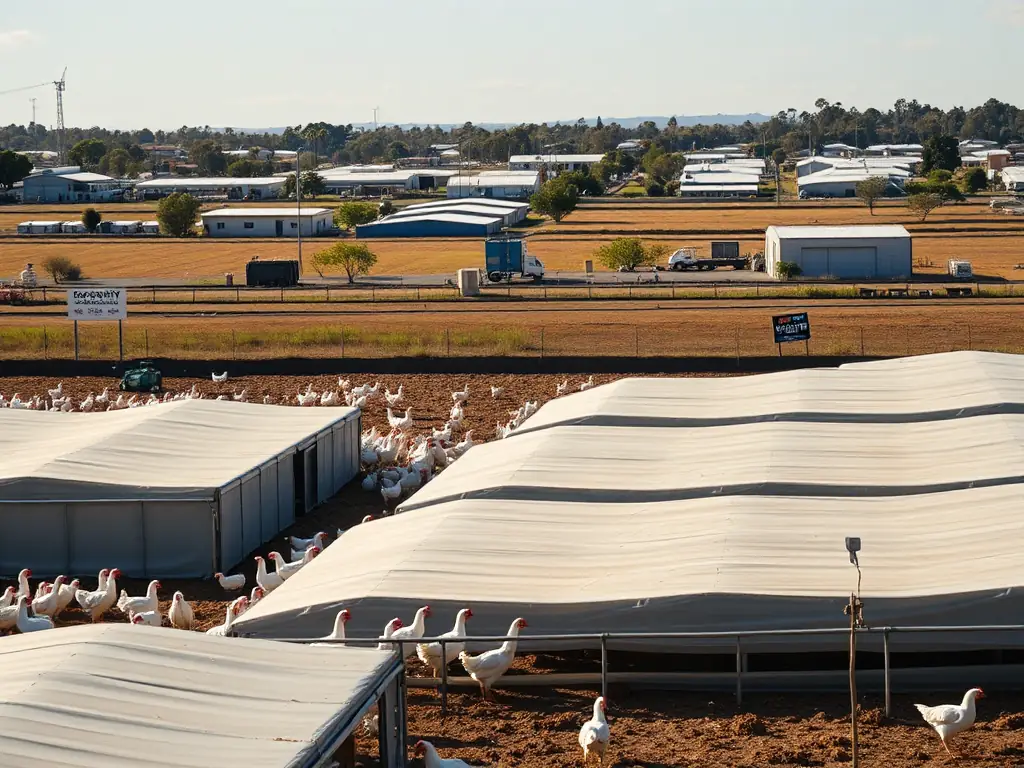
Australian poultry farmers are implementing a comprehensive suite of biosecurity measures to prevent bird flu outbreaks, focusing on minimising the risk of the virus entering their farms and containing it should an incursion occur. A cornerstone of these measures is strict control over access to farms. This includes limiting visitors to essential personnel only, requiring all visitors to disinfect footwear and clothing, and maintaining records of all individuals entering the property. Farms often employ designated clean and dirty zones to segregate areas and prevent the inadvertent transfer of contaminants. Robust cleaning and disinfection protocols for vehicles, equipment, and personnel are also critical, particularly after any staff or goods have been off-farm, or when new supplies are introduced. Another vital biosecurity strategy is the prevention of contact between domestic poultry and wild birds. This involves securing poultry housing to prevent wild birds from entering sheds, feeding areas, or water sources. Farmers often use netting or other physical barriers to exclude wild birds and ensure that feed and water are stored in protected areas, inaccessible to them. While complete isolation from the environment is challenging, these measures significantly reduce the potential for indirect transmission from wild bird droppings or contaminated water. The Australian poultry industry generally operates under strict biosecurity standards, and the recent detection of bird flu has reinforced the need for constant vigilance and investment in these preventative actions.
Furthermore, farmers are diligent about sourcing new birds from reputable, disease-free sources and maintaining a closed flock whenever possible, which means not introducing new birds after the initial stocking. This minimises the risk of bringing in diseased animals. Regular cleaning and disinfection of housing between flocks are standard practice, as is the proper disposal of all animal waste. Many farms also have established relationships with veterinarians who conduct regular health checks and provide advice on disease prevention and early detection. The Australian government provides extensive resources and guidelines to assist farmers in developing and implementing effective biosecurity plans, recognising that farm-level practices are the first and most critical line of defence against diseases like bird flu.
The economic reality for many farmers means that implementing the highest level of biosecurity requires ongoing investment in infrastructure, training, and hygiene products. While the upfront cost can be significant, it is far less than the potential losses incurred from an HPAI outbreak, which can involve the culling of tens of thousands of birds and extended periods of quarantine and restocking. For instance, maintaining a high level of hygiene and biosecurity can cost farms anywhere from $500 to $5,000 annually, depending on the size and complexity of operations, according to industry estimates. This demonstrates a commitment to protecting not only their own livelihoods but also the broader Australian agricultural sector and food supply from the devastating impacts of avian influenza. Farmers understand that their diligence contributes to the nation’s overall biosecurity and animal health status.
How much economic impact could bird flu have on Australia’s poultry and export markets?
The economic impact of a significant bird flu outbreak on Australia’s poultry industry and export markets could be substantial, potentially running into hundreds of millions of dollars. The immediate consequence of a highly pathogenic avian influenza (HPAI) detection is the culling of infected flocks, which directly leads to the loss of livestock value and production capacity. For example, if an outbreak affects a large commercial layer farm, the loss of tens of thousands of birds can mean a loss of millions of eggs per month. The Australian poultry sector is valued at approximately $5 billion annually, and a widespread outbreak could severely impact this figure by disrupting production, processing, and distribution channels. The cost of depopulating, disposing of carcasses, and thoroughly cleaning and disinfecting affected premises adds considerably to the direct losses incurred by producers.
Beyond the farm gate, the impact on export markets is a critical consideration. Australia exports poultry meat and egg products to various countries, and a confirmed HPAI outbreak would almost certainly trigger import bans from its trading partners. This would not only lead to a loss of export revenue but could also damage Australia’s reputation as a reliable supplier of disease-free animal products. Recovering lost market access after an outbreak can take years, even after the disease has been eradicated domestically. The financial implications of these trade disruptions are immense, impacting not only primary producers but also exporters and associated logistics companies. The absence of a verified statistic on the exact potential dollar figure for Australia is difficult to ascertain without a specific outbreak scenario, but international precedents suggest severe economic consequences.
Furthermore, the indirect economic effects are also considerable. Increased biosecurity measures across the industry, including enhanced surveillance, disinfection protocols, and potential compensation schemes for affected farmers, all represent significant costs. Consumer confidence can also be affected, leading to reduced demand for poultry products, even in unaffected regions. This can further depress prices and exacerbate the financial strain on the industry. While Australia has historically maintained a strong biosecurity record, the recent detection on the mainland underscores the ongoing risk and the need for robust preparedness to mitigate potential financial devastation. The Australian Bureau of Agricultural and Resource Economics and Sciences (ABARES) regularly provides economic outlooks for the agricultural sector, which would be directly impacted by such an event.
To put potential figures into perspective, the 2014-2015 HPAI outbreak in the United States led to an estimated economic impact of over USD 3.3 billion, encompassing direct losses, trade restrictions, and industry support measures (Source: USDA, 2016). While Australia’s industry is smaller, the proportional impact could be equally devastating. This highlights the critical importance of investing in preventative biosecurity measures and rapid response capabilities. The government’s commitment to supporting the agricultural sector through such crises, including potential compensation packages and financial assistance for restocking, is vital for the industry’s resilience. The Australian government’s Department of Agriculture, Fisheries and Forestry coordinates national response plans, recognising that preventing an outbreak is far more cost-effective than managing one.
What should Australian poultry farmers do if they suspect bird flu on their property?
If an Australian poultry farmer suspects bird flu on their property, the immediate and most crucial action is to report it to the relevant state or territory animal health authority without delay. This is a notifiable disease, meaning there is a legal obligation to report any suspicion. Delaying reporting can have severe consequences, including enabling the disease to spread further and potentially leading to stricter penalties. Farmers should not attempt to diagnose the disease themselves or move any birds, eggs, or products off the property, as this could facilitate the spread of the virus. Maintaining a strict standstill on all movements within and from the property is paramount until authorities have assessed the situation. The initial contact should be made via the emergency animal disease hotline for their state or territory.
Following the initial report, farmers must cooperate fully with government authorities and veterinarians. These professionals will guide the next steps, which typically involve clinical examination of birds, sample collection for laboratory testing, and the implementation of initial containment measures. These measures might include establishing a quarantine zone around the affected premises, restricting access to the property, and potentially ordering the culling of all birds on the affected farm to prevent further spread. Farmers should be prepared for these actions, as they are essential for controlling highly pathogenic avian influenza outbreaks. The Department of Agriculture, Fisheries and Forestry provides detailed guidelines and support to farmers during such crises. It is also advisable for farmers to have their biosecurity plan readily available and to be prepared to discuss it with authorities. This plan should outline their current biosecurity practices, including measures for visitor access, cleaning and disinfection, and preventing contact with wild birds. Understanding and adhering to the farmer’s own biosecurity protocols can be crucial in preventing the introduction and spread of disease. If a suspicion is confirmed as bird flu, the government typically provides compensation for culled birds and can offer support for restocking and recovery efforts. However, the primary focus at the suspected stage is containment and preventing wider dissemination of the pathogen, which requires swift and decisive action from both the farmer and regulatory bodies.
The financial and emotional toll of a suspected or confirmed bird flu outbreak can be immense. Farmers should also reach out to their industry representative bodies, such as peak poultry industry associations, for support and advice. These organisations can provide guidance on navigating the reporting process, understanding compensation schemes, and accessing resources for business continuity. For example, Poultry Hub Australia offers resources and advice for farmers on biosecurity and disease management. By acting swiftly and transparently, farmers not only protect their own businesses but also contribute significantly to safeguarding Australia’s broader agricultural sector and food security from the devastating effects of avian influenza. This proactive and responsible approach is a testament to the dedication of Australian farmers to animal health and public safety.