
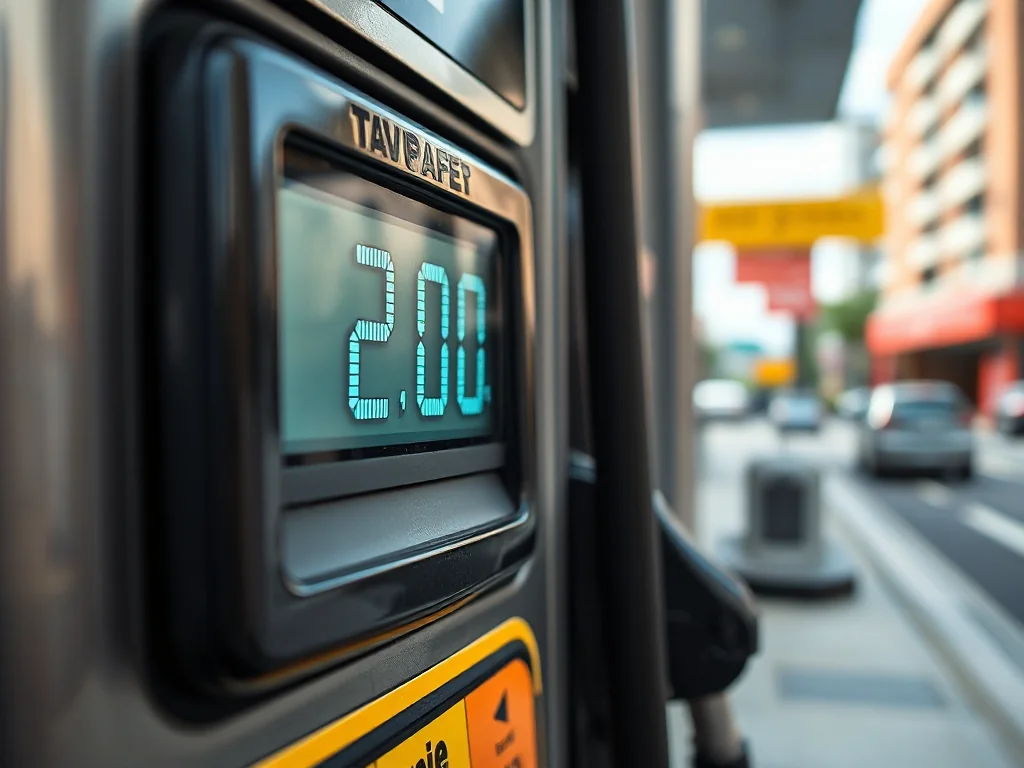
Petrol Prices Australia Set to Surpass $2 Per Litre as Fuel Excise Relief Ends
Recent government announcements confirm that petrol prices Australia-wide are on a rapid upward trajectory. With the temporary 16-cent fuel excise (a government tax on fuel) discount ending on 3 August 2026, motorists can expect costs to breach the $2 per litre threshold shortly. As a team at BanksiaPulse, we have been closely monitoring how these changes impact household budgets. According to official reports, petrol already costs more than $1.90 a litre in every capital city, and diesel is projected to exceed $2.40 per litre as the temporary cost-of-living relief measures conclude across the nation.
- Why are petrol prices in Australia expected to exceed $2 per litre?
- When does the fuel excise relief end and how will it affect pump prices?
- How much will the average Australian family spend on fuel after petrol hits $2 per litre?
- Which Australian states will be hit hardest by the $2 per litre petrol price surge?
- What is fuel excise and how does it impact the final price at the bowser?
- What can Australian drivers do to reduce fuel costs as prices reach $2 per litre?
- Frequently Asked Questions
Why are petrol prices in Australia expected to exceed $2 per litre?
Petrol prices in Australia are expected to exceed $2 per litre primarily due to the expiration of the federal government’s temporary fuel excise relief measures. This relief was initially introduced in March at the peak of a significant fuel price spike and was later halved in July to 16 cents per litre. As of 3 August 2026, the excise will return to its standard, full level, forcing service stations to adjust their wholesale prices accordingly. This represents a structural shift in the cost of fuel supply that retailers must pass on to consumers at the bowser. Furthermore, international market volatility continues to exert pressure on domestic fuel costs. While global crude oil pricing remains the baseline for Australian retail costs, the removal of the 16-cent discount creates an immediate, artificial lift in the price per litre. Energy Minister Chris Bowen has confirmed that the government will not extend this relief, signaling that the current policy path is final. Motorists are feeling the strain as these cumulative factors drive prices toward the $2 threshold in every capital city.
![[A photo of a petrol station price board showing rising fuel costs]](https://images.pexels.com/photos/8266747/pexels-photo-8266747.jpeg?auto=compress&cs=tinysrgb&h=650&w=940)
For context, consider the impact on your monthly transport budget. A vehicle with a 55-litre tank will cost approximately $8.80 more to fill up following the 16-cent increase in excise. This is a substantial added expense for families managing tight budgets during the ongoing cost-of-living challenges. You should check the MoneySmart guide to budgeting as of August 01, 2026, to reassess your transport spending. By tracking your fuel consumption and planning trips more efficiently, you can partially mitigate the impact of these rising costs on your personal finance management.
When does the fuel excise relief end and how will it affect pump prices?
The fuel excise relief officially ends on 3 August 2026, leading to an immediate 16-cent per litre increase in the wholesale cost of fuel. Service stations typically require four or more days to adjust their pump prices to reflect changes in excise or wholesale pricing shifts. This means that even though the excise changes on Sunday, the full price hike may be phased in gradually by retailers across various suburbs and regions. Motorists should anticipate a staggered increase as petrol stations replenish their stocks at the higher wholesale price point. The end of this subsidy marks a significant departure from the temporary relief measures implemented during earlier economic volatility. Energy Minister Chris Bowen emphasized that while the situation remains under monitoring, the government’s decision to cease the subsidy is definitive. This policy shift is intended to return the tax framework to its normal operational state, irrespective of the current retail price environment. For consumers, this implies that the days of the 16-cent discount are effectively behind us as we move into the second half of 2026.
Retailers have already begun preparing for this shift, and the market analyst Tom Woodlock from Argus Media notes that price adjustments at the pump rarely happen instantly. If you are planning a long-distance trip or need to fill your tank, it is wise to be aware of your local price fluctuations. Understanding that there is a lag period allows drivers to plan their refueling strategically. Keeping an eye on fuel-tracking apps can help you find the best value before the full excise increase is reflected across the entire retail network in your area.
How much will the average Australian family spend on fuel after petrol hits $2 per litre?
An average Australian household with a 55-litre tank will face an additional $8.80 per tank fill once the full 16-cent excise increase is realized. This calculation assumes that the retail price moves directly in line with the government’s tax adjustment. Over the course of a month, if you fill your tank weekly, this could equate to an extra $35.20 in fuel costs alone. For families already balancing mortgage repayments and rising utility bills, this represents a significant increase in non-discretionary spending that requires careful financial planning. To put this into perspective, we can look at the typical fuel consumption for an average Australian vehicle. Many commuters cover significant distances, and the cumulative impact of these price hikes can quickly exceed $400 or $500 in additional annual costs for a single-car household. Because fuel is a necessity for travel to work, school, and essential services, there is little room for families to reduce consumption without making major lifestyle adjustments. The financial strain is compounded by the fact that these price increases are occurring simultaneously across all capital cities.
When assessing your household’s resilience to these costs, it is useful to look at Australian Bureau of Statistics data regarding consumer price indices to understand broader inflationary trends. Many households are finding it necessary to consolidate trips or use public transport where possible to absorb these higher costs. If you find your budget is significantly impacted, reviewing your non-essential spending categories is a practical way to create buffer space for the rising costs of fuel and other transport-related expenses.
Which Australian states will be hit hardest by the $2 per litre petrol price surge?
Every capital city in Australia is currently experiencing prices above $1.90 per litre, meaning the surge to $2 will affect residents across all states equally as the excise changes apply nationally. While regional and remote areas often pay higher prices than capital cities due to transport and logistical costs, the 16-cent excise increase serves as a uniform uplift for every litre sold. Consequently, the proportional impact is felt most severely by those in regional locations who already pay a premium for fuel and travel longer distances to access essential services. Market data suggests that while urban centers might see faster price changes due to higher competition and turnover, rural communities will see these price hikes integrated into their baseline costs very quickly. In many remote parts of Australia, the cost of fuel is already closer to or above the $2 mark, and the removal of the 16-cent relief will push those prices even further into unchartered territory. This creates a disproportionate hardship for regional workers, farmers, and those who have no alternative to driving for their daily survival.
Drivers in metropolitan areas like Sydney or Melbourne may have more access to public transport or competitive pricing, which offers some defensive mechanisms against these hikes. However, residents in outer suburban fringes or regional hubs have less flexibility. The decision to end the fuel excise relief does not account for these geographic disparities, making the coming weeks particularly challenging for those living far from major infrastructure hubs. It is critical to monitor local fuel watch websites to ensure you are not paying above-average prices in your specific state or territory.
What is fuel excise and how does it impact the final price at the bowser?
Fuel excise is a tax levied by the federal government on fuel products, which is factored into the wholesale price paid by service stations before it ever reaches the consumer. When the government modifies this tax—as they did by reducing it by 32 cents and then 16 cents—the wholesale cost changes, which then dictates the floor price for retail fuel. The return of the excise to its normal level on 3 August 2026 effectively restores this tax revenue stream to the government, but it removes the price buffer that has been supporting motorists for months. The mechanism behind this is relatively straightforward: the wholesale cost of fuel is the sum of the global oil price, refining costs, transport, and the excise. When the excise is increased, the station operator must raise the pump price to cover their increased wholesale purchase costs if they wish to maintain their profit margins. Because competition is high among retailers, some may try to delay raising prices to attract customers, but the underlying cost structure ultimately forces the price upward across the entire industry once the adjustment is fully processed.
Understanding this relationship helps motorists realize that service station owners are not always the ones driving price hikes; they are responding to federal policy and global supply costs. For the average driver, this means price volatility is linked to both international events and Canberra’s fiscal policy. By staying informed about when tax adjustments take effect, you can better understand why prices move the way they do at the pump. This transparency is key to managing your expectations during periods of high economic pressure and fluctuating energy costs.
What can Australian drivers do to reduce fuel costs as prices reach $2 per litre?
Australian drivers can reduce fuel costs by utilizing fuel-price tracking apps and planning their refueling trips during off-peak cycles to avoid paying the highest prices. Many apps now provide real-time data on the cheapest petrol stations in your local area, which can save you significant amounts over a month. Furthermore, maintaining your vehicle through regular servicing—such as keeping tires properly inflated and replacing air filters—can improve fuel efficiency, allowing you to get more kilometers out of every litre you put into your tank. Changing driving habits is another effective strategy for long-term savings. Avoiding rapid acceleration and braking can drastically reduce your fuel consumption, especially in stop-start traffic commonly found in capital cities. If possible, consolidating errands into a single trip rather than making multiple short journeys can also lower your total fuel usage. For those with access to public transport, switching to trains or buses for even two days a week can provide a substantial reduction in your annual fuel expenditure during these periods of high prices.
Finally, consider the benefits of carpooling if you commute to work in an area with poor public transport access. Sharing the cost of fuel with a colleague can effectively halve your personal expenditure, providing a financial safety net against the rising costs at the bowser. While individual actions may seem small, they collectively help in managing the impact of the end of the excise relief. Staying proactive and mindful of your consumption will be the most effective way to navigate the financial challenges presented by the current petrol price environment.