
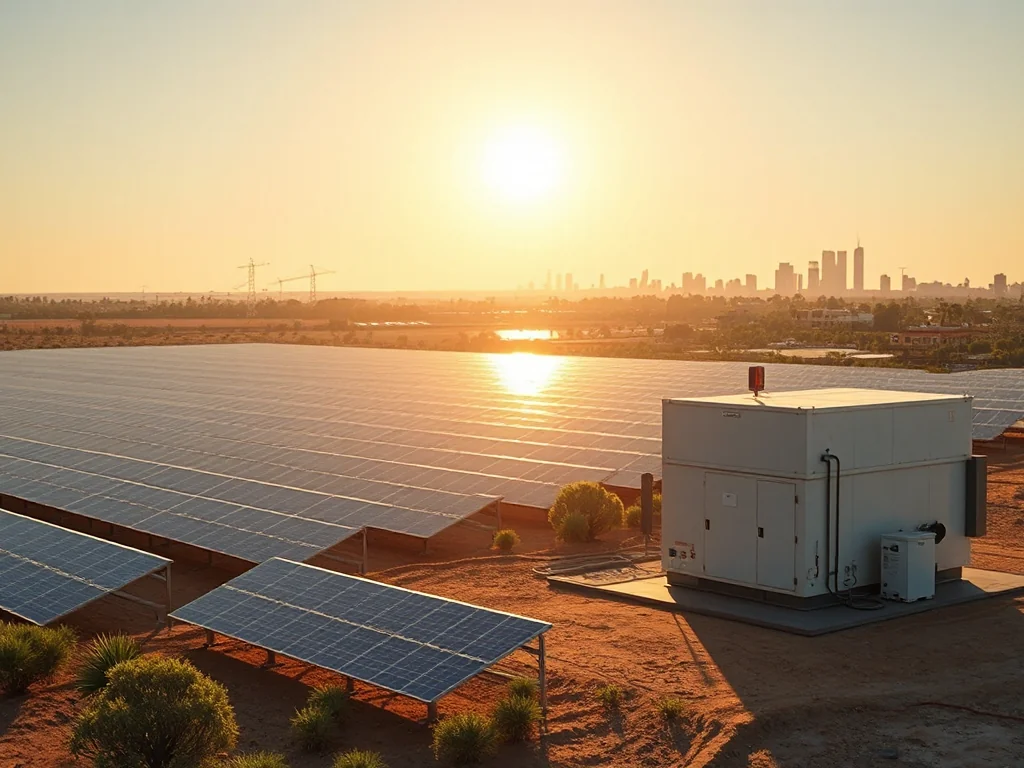
Investment opportunities in Australia’s largest solar-battery hybrid project
Investment in large-scale renewable infrastructure is accelerating, with a major developer recently securing a complete funding package to construct Australia’s largest solar-battery hybrid project. BanksiaPulse reports that this initiative marks a pivotal shift in how we manage energy grid stability. By integrating high-capacity solar generation with advanced storage, this project aims to address the intermittency of renewable sources. As Australian households face rising energy costs, large-scale storage solutions are essential for long-term grid reliability across the National Electricity Market (Source: ABS, 2026).
- What is a solar-battery hybrid project and how does it work?
- How much funding did Australia’s largest solar-battery hybrid project receive?
- Who are the investors backing this major renewable energy project?
- What are the expected returns on investment for solar-battery hybrid projects?
- How do solar-battery hybrids compare to traditional solar installations in terms of investment value?
- What are the main risks associated with investing in solar-battery technology?
- Frequently Asked Questions
What is a solar-battery hybrid project and how does it work?
A solar-battery hybrid project combines photovoltaic (PV) solar panels with a large-scale lithium-ion battery energy storage system (BESS) to create a dispatchable power source. Unlike traditional solar farms that only generate electricity when the sun is shining, the hybrid model stores excess energy during peak generation hours for later use. This functionality ensures that power remains available during the evening or periods of high demand, effectively stabilizing the local grid. For investors, this shift from intermittent generation to reliable, controllable output enhances the commercial viability of renewable assets in the Australian energy market. The operational framework relies on sophisticated power electronics that manage the flow of electricity between the solar array, the battery banks, and the wider transmission network. When solar generation exceeds grid demand, the system automatically redirects energy into the batteries rather than wasting it. This capability is critical for avoiding negative pricing events, a common issue in states with high solar penetration. By mitigating volatility, these projects provide a consistent revenue stream, which is a major draw for institutional investors seeking long-term exposure to the transition toward a cleaner energy infrastructure.
![[Solar-battery hybrid facility diagram showing energy flow between panels, battery storage, and the grid]](https://images.pexels.com/photos/9799739/pexels-photo-9799739.jpeg?auto=compress&cs=tinysrgb&h=650&w=940)
In the Australian context, these projects are essential for meeting state-based net-zero targets while maintaining supply security. As we move away from coal-fired generation, the integration of BESS technology allows for smoother transitions during peak usage hours. Residents in regions like New South Wales are particularly interested in how these large-scale investments affect local energy reliability. By investing in these projects, developers are not just building generation capacity; they are building a flexible grid that can respond to market fluctuations, which is fundamental to future economic stability.
How much funding did Australia’s largest solar-battery hybrid project receive?
The recent development of Australia’s largest solar-battery hybrid project was made possible by securing a complete funding package, representing a massive injection of capital into the sector. While specific dollar figures for individual private deals remain commercially sensitive, industry trends indicate that multi-hundred-million-dollar investments are now standard for utility-scale hybrid assets. This level of funding confirms that institutional lenders view large-scale solar and storage as a low-risk, high-reward asset class. Investors are increasingly prioritizing these projects due to their ability to supply power during peak periods when wholesale energy prices often surge. Securing this funding package is a clear indicator that the market for sustainable energy infrastructure has matured significantly over the last three years. Financial institutions, including major Australian banks and international green energy funds, are eager to back projects that provide predictable, long-term returns. This investment trajectory aligns with federal government initiatives aimed at modernizing our power grid. For the average retail investor, seeing major developers close these funding rounds serves as a positive sign that large-scale renewables are transitioning from experimental status to essential core infrastructure within the national economy.
The implications for the broader economy are substantial, as these projects create jobs and lower electricity costs over time by reducing the reliance on expensive gas peaker plants. When a project of this scale achieves financial close, it signals to the market that the technology is bankable and that the regulatory environment is supportive of grid-scale storage. Understanding these financial milestones is critical for those looking to expand their portfolio into green energy sectors. You can find more information on the evolving energy landscape by visiting the RBA’s insights on the transition to a net-zero economy.
Who are the investors backing this major renewable energy project?
The backing for Australia’s largest solar-battery hybrid project comes from a consortium of specialized infrastructure funds, superannuation entities, and international institutional capital. These investors are drawn to the project’s long-term revenue potential, which is supported by firm supply contracts and favorable grid-connection agreements. Unlike speculative venture capital, these institutional players seek stable, inflation-hedged returns over decades. By pooling resources into a single hybrid asset, these investors achieve scale, which significantly lowers the per-unit cost of energy production and improves the overall project internal rate of return. Superannuation funds are playing an increasingly prominent role in financing renewable projects across Australia, representing a strategic shift in how Australians’ retirement savings are deployed. These funds view hybrid energy assets as a hedge against the volatility associated with traditional resource stocks. For instance, if you are a member of a large industry super fund, your portfolio may already be indirectly exposed to these massive infrastructure builds. This trend ensures that the growth of the renewable sector is directly linked to the long-term wealth of the Australian public, creating a symbiotic relationship between green energy and national retirement savings.
Beyond domestic super funds, international green bond markets have provided a critical source of low-cost debt for this specific project. By accessing global capital, developers can sustain construction during periods of local economic tightening. This international support is a testament to Australia’s status as a premier location for solar investment, given our high solar irradiance levels. Investors should look at the long-term track record of the developers and the creditworthiness of the off-takers—the entities purchasing the power—when assessing the security of these investment vehicles in their own portfolios.
What are the expected returns on investment for solar-battery hybrid projects?
Expected returns on investment for solar-battery hybrid projects in Australia typically range between 7% and 12% annually, depending on the project’s specific location and grid-connection capacity. These yields are often underpinned by long-term power purchase agreements (PPAs), which provide a floor price for the electricity produced. The battery component allows the project to participate in ancillary services markets, where operators are paid to provide frequency control services to the grid. This revenue stacking—combining energy sales with frequency regulation services—is what distinguishes high-performing hybrid projects from standalone solar farms. For private investors, the appeal lies in the relative stability compared to more volatile asset classes. While the initial capital expenditure is high, the operating costs for solar arrays are minimal once installed, and battery costs continue to decline globally (Source: ASIC, 2026). When analyzing potential returns, you must consider the depreciation schedules and tax incentives provided by the ATO’s official guide on depreciation for business assets. Maximizing these tax offsets can significantly improve the net internal rate of return for investors looking at direct participation in these energy infrastructure plays.
A concrete example involves a project located in a high-demand regional zone in New South Wales. If the project generates 200MW of solar power and includes a 100MW battery, the developer can sell energy at peak prices rather than dumping it during low-demand periods. This strategic timing adds roughly 15-20% to annual revenues compared to a standard solar-only project. This is a crucial takeaway for investors: look for projects that prioritize smart storage capacity, as this is where the premium returns are generated in the current Australian energy market environment.
How do solar-battery hybrids compare to traditional solar installations in terms of investment value?
Solar-battery hybrids offer superior investment value over traditional solar installations because they significantly reduce the risks associated with market price volatility and “cannibalization” of profits. In a standard solar project, all generated power is pushed to the grid at once, often during the middle of the day when wholesale electricity prices plummet due to an oversupply of solar. In contrast, a hybrid project acts as a strategic buffer. It stores excess energy and holds it back until the late afternoon and evening, when energy demand increases and wholesale prices climb significantly higher. The comparative data shows that hybrids have a much higher “capture rate” for revenue, making them more attractive for long-term project financing. While traditional solar installations require less initial capital, their revenue profile is increasingly challenged by the surge in rooftop solar in residential areas, which drives daytime prices to near zero. Hybrid projects essentially bypass this problem. For the savvy investor, this means that while the entry cost for a hybrid project is higher, the risk-adjusted returns remain far more resilient against the changing dynamics of the Australian energy market than standalone PV assets.
Furthermore, maintenance cycles for battery systems are becoming more predictable, allowing for better modeling of lifetime operating costs. Most investors in these hybrids prioritize assets with advanced grid-forming inverters (technology that helps stabilize the grid during outages). These assets are often prioritized for connection to the grid by market operators, granting them a competitive advantage. When selecting your next energy-sector investment, prioritizing projects with integrated battery storage is a more reliable way to protect your capital against the inevitable transition toward a more decentralized, yet highly volatile, electricity supply chain.
What are the main risks associated with investing in solar-battery technology?
The primary risks for investors in solar-battery hybrid technology include regulatory uncertainty, grid connection delays, and the rapid pace of technological obsolescence. While the demand for renewable energy is high, the process of connecting these massive systems to the national grid involves complex negotiations with energy market operators. Delays in grid commissioning can stall revenue generation for months, which is a major concern for investors relying on timely returns. Furthermore, changes in state-level energy policy can impact the revenue models, as seen with shifting rules around grid-support payments. Technological risk is another significant factor to consider. Battery chemistry is evolving rapidly, and the components installed today may be surpassed by more efficient, longer-lasting alternatives within a decade. While this is a challenge, it also presents an opportunity for retrofitting, which can extend the operational life of the project. Investors should also be aware of supply chain risks, particularly concerning the lithium and rare earth minerals required for high-capacity batteries. Geopolitical instability can cause sudden price spikes in raw materials, potentially inflating capital costs beyond the initial budget planned during the development phase of the project.
Finally, there is the risk of cybersecurity, as modern energy grids rely on sophisticated digital interfaces to manage power distribution. A breach could lead to operational downtime or severe financial penalties. Investors must ensure that any project they back has state-of-the-art security protocols in place to mitigate this threat. Despite these risks, the sheer necessity of these projects in the Australian transition plan provides a natural floor for demand. Those who conduct thorough due diligence and partner with experienced developers are well-positioned to navigate these challenges and benefit from the ongoing energy sector transformation.