
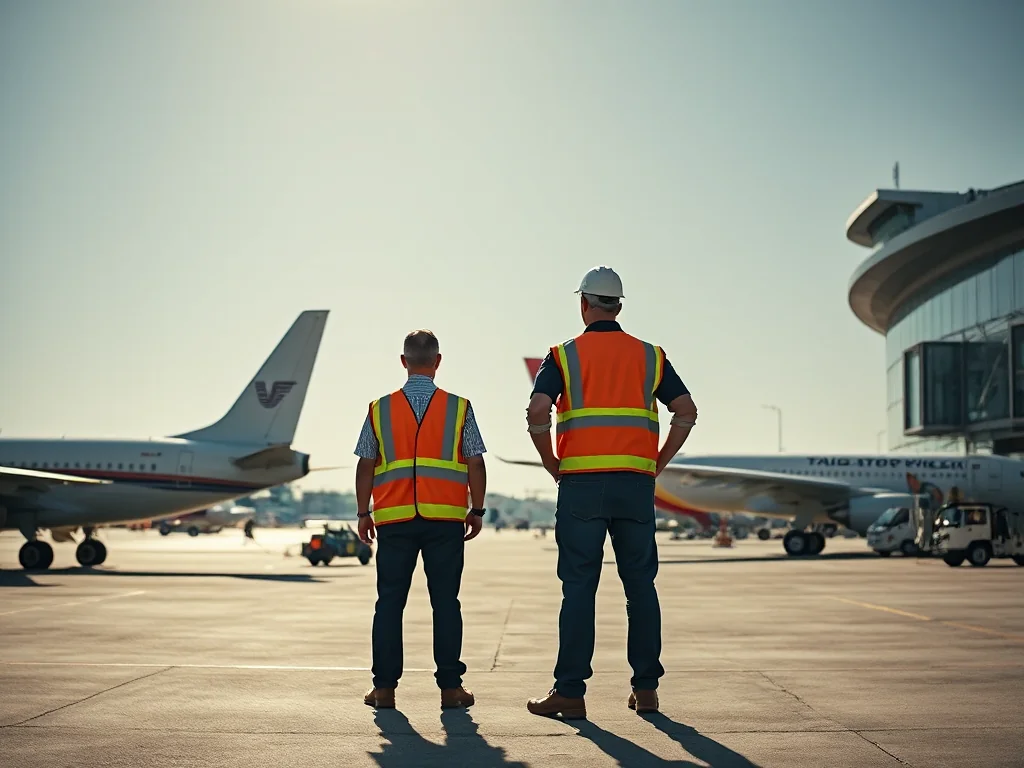
Sydney airport safety: Near-miss incident investigation
Sydney airport safety depends on strict adherence to established flight path protocols, yet a recent near-miss involving a Jetstar and a Qatar Airways plane highlights ongoing operational risks. As reported by BanksiaPulse on August 10, 2026, two staff members were stood down following this incident. This event has prompted the Transport Minister, Catherine King, to mandate improved staff rostering starting next month to address unacceptable delays. Ensuring safe skies is a shared priority for all Australian travellers (Source: Department of Infrastructure, 2026).
- What are the main safety protocols at Sydney Airport to prevent collisions?
- How do near-miss incidents affect airport operations and staff procedures?
- What happens when airport workers are stood down following safety violations?
- Why is ground handling safety critical at Sydney Airport?
- What are the common causes of vehicle collisions at major airports?
- How does Sydney Airport train staff to avoid workplace accidents?
- Frequently Asked Questions
What are the main safety protocols at Sydney Airport to prevent collisions?
Safety protocols at Sydney Airport rely on highly structured air traffic control sequences and rigorous ground movement monitoring to prevent collisions. Controllers use advanced radar systems to maintain mandatory separation distances between aircraft, which typically include at least 1,000 feet of vertical space or specific lateral buffers (Source: Airservices Australia, 2026). When aircraft are on the tarmac, ground handling teams must follow established “movement area” guidelines, which dictate exactly where ground vehicles can drive in relation to active taxiways. These rules are designed to eliminate human error during the high-pressure turnaround phase of flight operations. By integrating technology with human oversight, airports aim to provide a safe buffer for every movement. For instance, if a pushback tug operator strays from a marked line, sensors and visual spotters act as immediate failsafes to stop the equipment before a risk to the airframe occurs. Keeping these pathways clear is essential for maintaining the high volume of traffic handled daily at the facility.
![[Aerial view of Sydney Airport runways and tarmac showing active ground operations]](https://images.pexels.com/photos/19854584/pexels-photo-19854584.jpeg?auto=compress&cs=tinysrgb&h=650&w=940)
The reliance on standardized operating procedures (SOPs) is what keeps international and domestic transit safe during peak hours. Each pilot and ground controller must be certified to operate within the specific constraints of the Sydney airspace, which is often considered one of the busiest in the nation. According to recent data from the Australian Bureau of Statistics regarding aviation transport movements, the sheer volume of daily flights necessitates a near-perfect execution of these safety protocols. Beyond the technology, human vigilance remains the primary defense against unexpected issues. Staff receive regular updates on runway occupancy and must confirm clearance from the control tower before crossing any line. This layers of protection approach ensures that even if one component fails, there are backups to prevent a catastrophic accident from occurring on the ground or in the immediate departure zones.
Practical safety for passengers often starts long before boarding, as airline procedures are audited against national standards. Passengers can feel confident knowing that the incident on Sunday, which resulted in two workers being stood down, triggered an immediate review of these systemic protocols. The government’s decision to intervene with improved rostering indicates a focus on fatigue management, as tired staff are statistically more likely to miss subtle visual cues. Taking these proactive steps helps to maintain the high reliability expected of Australia’s primary transport hubs. If you are concerned about travel safety, check the latest updates on the official Department of Infrastructure website for information on current safety mandates. Staying informed about how these protocols function allows you to understand the significant effort that goes into every takeoff and landing, ensuring the system remains stable and secure for the millions of people moving through the airport annually.
How do near-miss incidents affect airport operations and staff procedures?
Near-miss incidents serve as critical “trigger events” that force an immediate re-evaluation of current airport operations and staff daily procedures. When an event like the recent Jetstar and Qatar Airways interaction occurs, authorities initiate a formal investigation to determine if the cause was human, mechanical, or systemic. According to government oversight, such investigations often lead to a direct overhaul of local rosters to ensure that workers are not facing excessive hours that might compromise their situational awareness (Source: Transport Minister, 2026). These investigations are not merely administrative; they change how every ground vehicle moves and how every controller communicates with pilots. By identifying the exact breakdown in the chain of command, the airport can implement new training modules that address those specific gaps, ensuring the same oversight does not happen again. The goal is to evolve the safety culture through continuous learning rather than just identifying fault.
Operational shifts often involve the temporary suspension of specific staff members to allow for a comprehensive, unbiased inquiry. This process is standard practice in high-risk environments like commercial aviation, where the safety of hundreds of passengers depends on the accuracy of individual actions. While standing down workers may lead to short-term delays, the long-term benefit is a more resilient and alert workforce. For the average traveller, these changes might manifest as slightly slower ground movements or additional mandatory safety briefings for airline staff. These are necessary trade-offs to prioritize security over absolute speed. When you see ground crews performing extra checks before a flight, it is often a direct result of these updated protocols being put into practice. The industry uses these incidents to recalibrate its approach, proving that the system is responsive to real-time data and committed to the highest possible standard of safety for the public.
From an Australian perspective, the impact of these incidents is felt nationwide, as Sydney acts as a primary hub for international transit. When local protocols are updated, they often set a benchmark for other regional airports to follow. The government’s proactive stance on changing rosters highlights a commitment to the well-being of the transport workforce. If you are travelling through Sydney, you might notice a more methodical pace as these new safety measures are integrated into the daily routine. The objective is to make the airport experience as predictable as possible, even in the face of complex logistics. By focusing on the human element—specifically fatigue and rostering—the aviation sector addresses the root cause of many operational errors. This systematic approach ensures that safety is not just a policy written in a manual, but a tangible practice that protects you during your next journey through the skies.
What happens when airport workers are stood down following safety violations?
When airport workers are stood down following a safety violation, they are temporarily removed from active duty to ensure the integrity of an ongoing investigation. This procedure is common in safety-critical industries like aviation, allowing authorities to assess whether specific actions contributed to a near-miss or potential collision. During this period, the individuals involved are usually interviewed to gather facts, while independent safety regulators examine logs, radio transcripts, and surveillance footage to reconstruct the event sequence. This investigation is essential to determine whether the issue was an isolated human error or a broader failure in training or equipment. By removing the staff from the operational loop, the airport prevents potential reoccurrence while the inquiry is active, providing the space needed for a fair and thorough assessment of the situation on the ground.
Once the investigation concludes, the findings dictate the path forward for the workers and the airport’s management teams. If the investigation reveals that the violation was due to systemic issues like fatigue or poor rostering, the airport may be required to adjust its operational staffing levels, as seen in the recent government directive. Conversely, if individual conduct was the primary factor, the employer may implement targeted retraining, internal discipline, or updated qualification requirements to ensure the worker meets the high standards necessary for working on a flight line. This process acts as a corrective measure that upholds the safety standards of the entire aviation industry. For employees, this can be a period of significant professional scrutiny, but it is a necessary part of a robust safety framework that prioritizes the public interest. Everyone on the tarmac has a role in maintaining order, and these reviews verify that each link in the chain remains strong.
For passengers, understanding this process offers peace of mind that breaches are taken seriously and addressed with formal, verified procedures. The incident at Sydney Airport serves as a reminder that safety is an active, ongoing effort rather than a static state. Whenever an issue arises, the system moves to isolate the cause and prevent similar events. This constant state of monitoring and correction is what makes air travel one of the safest modes of transportation in Australia. You can be assured that any staff member working in sensitive areas is subject to strict regulatory oversight, and any lapse in performance is met with a transparent, investigative process. This commitment to transparency and accountability ensures that the airport remains a safe environment for everyone, from the ground crew to the passengers sitting in the departure lounge waiting for their next international flight home.
Why is ground handling safety critical at Sydney Airport?
Ground handling safety is critical at Sydney Airport because the tarmac is a high-density, high-risk environment where massive machines and human workers operate in very close proximity. Every year, thousands of aircraft rely on the precision of ground crews for refueling, luggage transport, and aircraft pushback maneuvers. A single error in judgment or a failure in communication can lead to significant structural damage or, in extreme cases, severe injuries to staff and passengers. With hundreds of thousands of annual movements, the margin for error is near zero. Ground handling operations are the invisible foundation of the airport; they ensure that flights stay on time while managing the complex logistics of safely turning around an aircraft. By maintaining high standards of spatial awareness and strictly adhering to clearance zones, workers protect the multi-million dollar assets and the thousands of lives that flow through the facility every single day (Source: Department of Infrastructure, 2026).
The complexity of ground operations is compounded by the sheer variety of vehicles sharing the tarmac. From fuel trucks and baggage belts to catering vans and pushback tugs, the movement is constant and requires seamless coordination. Safety relies on every driver and spotter following established traffic patterns and maintaining radio contact with the control tower. When one of these elements fails, as occurred during the recent near-miss, the potential for a collision increases dramatically. This is why airports implement stringent training and certification programs for all ground staff. For example, a worker driving a baggage cart must be fully aware of the restricted zones surrounding a moving aircraft’s wingtips. Any breach of these zones is treated as a major safety event, triggering the same type of formal investigation and administrative review that occurred after the incident this past Sunday. Staying within these safety bounds is the single most effective way to prevent accidents.
Beyond individual actions, the management of these operations requires a high-level view of logistics and fatigue. The government’s focus on rostering proves that safety is not just about the individual worker’s skills, but the environment in which they are placed. When workers are well-rested and supported by efficient scheduling, their ability to perform critical safety checks improves significantly. This reflects a broader understanding that safety is an organizational responsibility, not just an individual one. If you look at the MoneySmart guidance on travel planning, you will see how interconnected aviation reliability is with the overall economy. By prioritizing ground safety, the airport ensures that the entire transport network functions smoothly, minimizing disruptions and maximizing security for all travellers. This holistic approach is essential for maintaining Australia’s reputation for safe and efficient global air travel, making every flight a secure experience.
What are the common causes of vehicle collisions at major airports?
Common causes of vehicle collisions at major airports typically involve a combination of human fatigue, poor visibility, and lapses in communication between ground teams and the control tower. In a high-pressure environment, the physical and mental toll of shift work can lead to reduced reaction times, making it harder for staff to maintain awareness of their surroundings. Furthermore, airports are vast, chaotic spaces where multiple teams must coordinate in real-time. If a driver loses focus or receives unclear instructions, they may inadvertently enter the path of a taxing aircraft or another support vehicle. These risks are exacerbated during peak periods when the pace of operations is at its absolute fastest. Because ground handling vehicles lack the advanced automated collision-avoidance systems found in modern aircraft, the responsibility for safety rests almost entirely on the shoulders of the personnel operating them.
Technical equipment failures or misunderstandings regarding clearance zones also contribute to these incidents. For instance, a driver might assume they have enough space to clear a taxiway, only to miscalculate the turning radius of a large passenger jet. Because airports are filled with different types of machinery—each with unique blind spots and stopping distances—miscommunication is a persistent challenge. A ground crew member might be focused on completing their specific task, such as connecting a power unit, and fail to notice an active warning light or a signal from a colleague. These localized errors can cascade, leading to a near-miss that necessitates an immediate emergency stop for the entire area. Understanding these common risks is why airports are constantly updating their training to emphasize the “stop and look” rule, which requires drivers to pause and verify their surroundings before entering any active area.
To combat these issues, major airports are increasingly turning to better scheduling practices and enhanced visual aids. The recent government intervention at Sydney Airport, which mandates better rostering, is a direct attempt to mitigate the fatigue-related risks that often precede these collisions. By ensuring that workers are alert and focused, the airport reduces the likelihood of the minor lapses that can lead to major safety incidents. For the average passenger, the takeaway is that your safety is being managed through a rigorous, data-driven approach to human resource management. This proactive oversight, combined with regular equipment checks and safety audits, provides a strong layer of defense against the dangers inherent in airport operations. While collisions are rare, the industry’s commitment to investigating every near-miss ensures that safety protocols continue to improve, keeping your journey through the airport secure and incident-free in 2026.
How does Sydney Airport train staff to avoid workplace accidents?
Sydney Airport trains its staff to avoid workplace accidents through comprehensive, tiered certification programs that combine theoretical classroom learning with rigorous, hands-on practical experience. Every employee, from air traffic controllers to ground service personnel, must complete mandatory safety modules that cover topics like tarmac hazards, vehicle operation in restricted zones, and clear radio communication procedures. This training is not a one-time event; it involves regular, ongoing assessments to ensure that every individual remains proficient in their role. If a new procedure is introduced—such as an updated runway crossing rule—all relevant staff must pass a competency test before the change takes effect. This ensures that safety standards are consistently high across the entire workforce, regardless of their specific department or length of tenure.
Practical simulations serve as a core component of this training, allowing staff to experience high-pressure scenarios in a controlled environment. For example, a new worker might spend dozens of hours in a simulator practicing how to approach an aircraft during various weather conditions. This builds the muscle memory necessary to respond safely when real-world conditions become challenging. By incorporating real-world incident data into these simulations, the training stays relevant and reflective of the actual risks present on the tarmac. When staff members understand the “why” behind every safety rule, they are much more likely to follow it, even when under time pressure. This culture of constant learning and professional development is a hallmark of Australia’s top-tier aviation operations, which aim to foster an environment where safety is the top priority for every single team member.
Beyond technical skills, the training focuses on soft skills like teamwork and situational awareness, which are just as vital for avoiding accidents. Staff are taught to communicate clearly and decisively, ensuring there is no ambiguity when they receive or give instructions. They also learn how to speak up if they notice a potential hazard, creating a safety-first atmosphere where concerns can be raised without fear of reprisal. This approach empowers the workforce to take collective ownership of safety, ensuring that even if one person misses a detail, another will catch it. The investment in this training is a testament to the importance of human safety at the airport. By focusing on both the individual and the team, Sydney Airport builds a resilient system that can handle the complexities of modern travel and protect you throughout your journey in 2026.